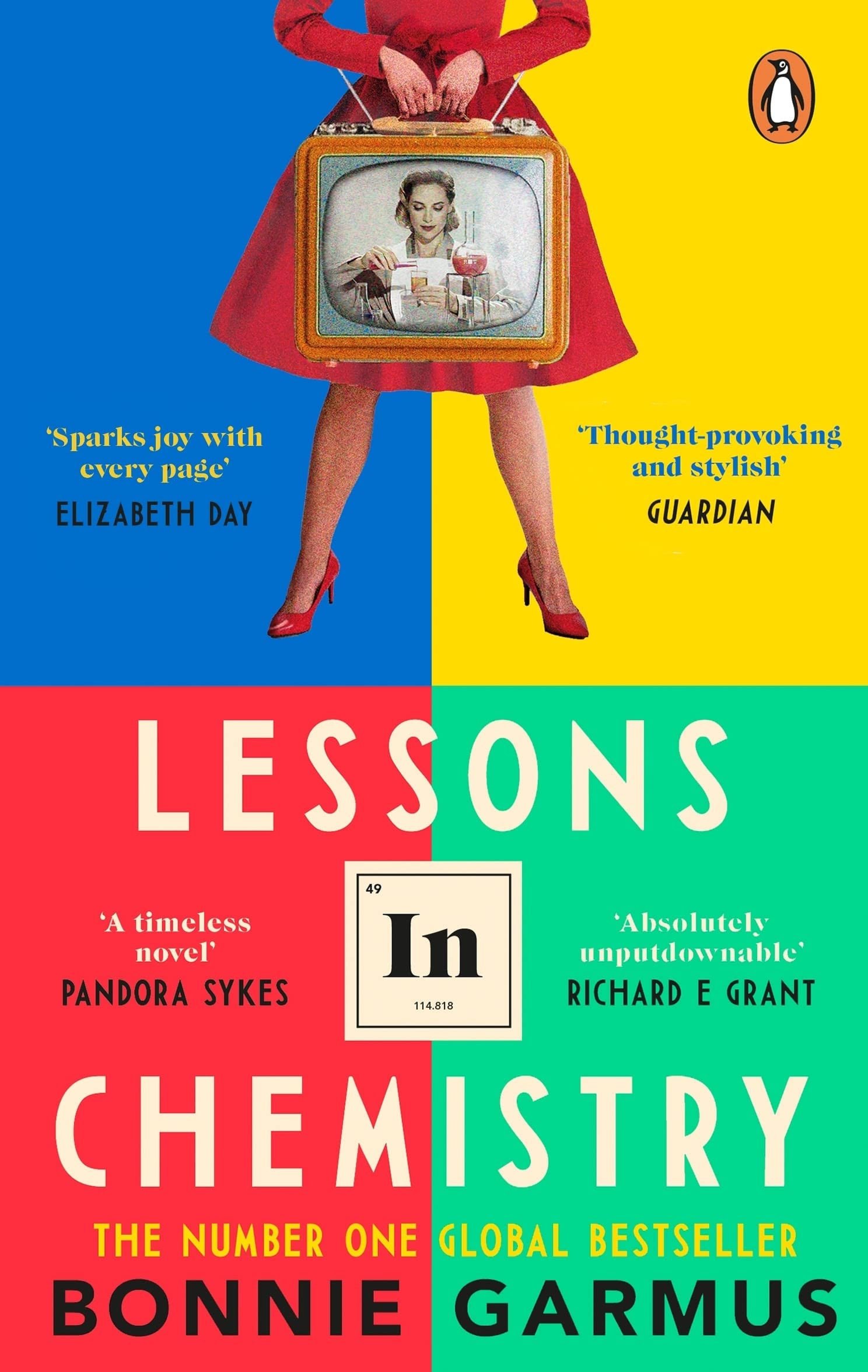
Cover of Lessons in Chemistry by Bonnie Garmus

5 book recommendations

Books Like “Lessons in Chemistry” by Bonnie Garmus

If you fell in love with Elizabeth Zott’s sharp wit, fierce independence, and uncompromising fight against the status quo, you are not alone. Readers everywhere were captivated by this charming blend of humor, heart, and feminist historical fiction. Explore our curated recommendations below to discover your next empowering, unforgettable read.

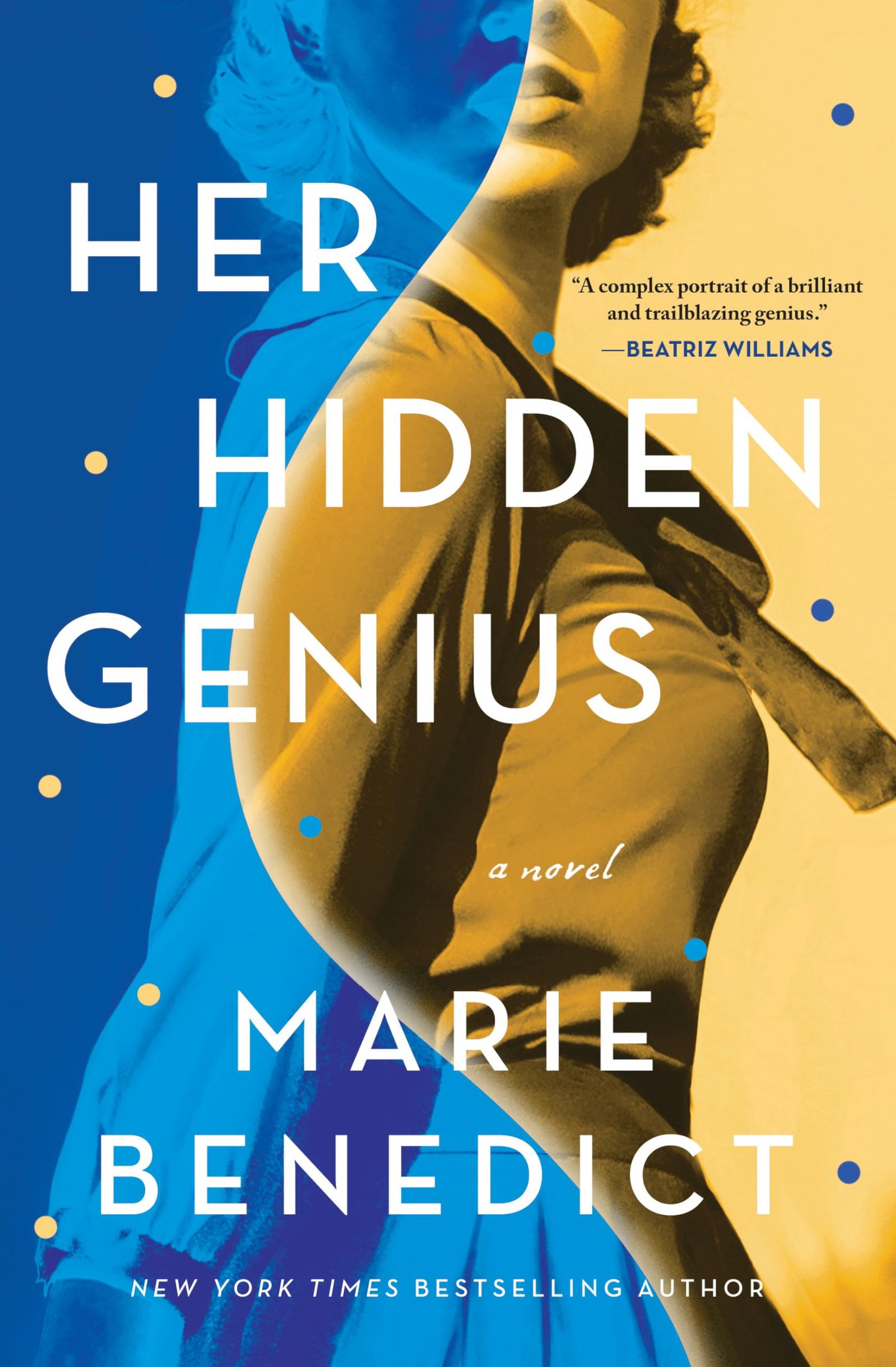
  1. Cover of Her Hidden Genius by Marie Benedict

    Cover not available

    Her Hidden Genius

    by Marie Benedict

    From the New York Times bestselling author of The Mystery of Mrs. Christie and The Only Woman in the Room!

    Rosalind Franklin has always been an outsider--brilliant, but different. Whether working at the laboratory she adored in Paris or toiling at a university in London, she feels closest to the science, those unchanging laws of physics and chemistry that guide her experiments. When she is assigned to work on DNA, she believes she can unearth its secrets.

    Rosalind knows if she just takes one more X-ray picture--one more after thousands--she can unlock the building blocks of life. Never again will she have to listen to her colleagues complain about her, especially Maurice Wilkins who'd rather conspire about genetics with James Watson and Francis Crick than work alongside her.

    Then it finally happens--the double helix structure of DNA reveals itself to her with perfect clarity. But what unfolds next, Rosalind could have never predicted.

    Marie Benedict's powerful new novel shines a light on a woman who sacrificed her life to discover the nature of our very DNA, a woman whose world-changing contributions were hidden by the men around her but whose relentless drive advanced our understanding of humankind.

    Why it's similar

    Both novels center on brilliant female scientists in the mid-20th century who confront entrenched misogyny and institutional barriers in laboratory research. Like Elizabeth Zott, protagonist Rosalind Franklin refuses to compromise her standards despite working in a hostile, male-dominated environment.

    What's different

    Unlike the satirical, fictional world of Lessons in Chemistry, this book is biographical historical fiction adhering closely to real events, resulting in a strictly serious and tragic tone.
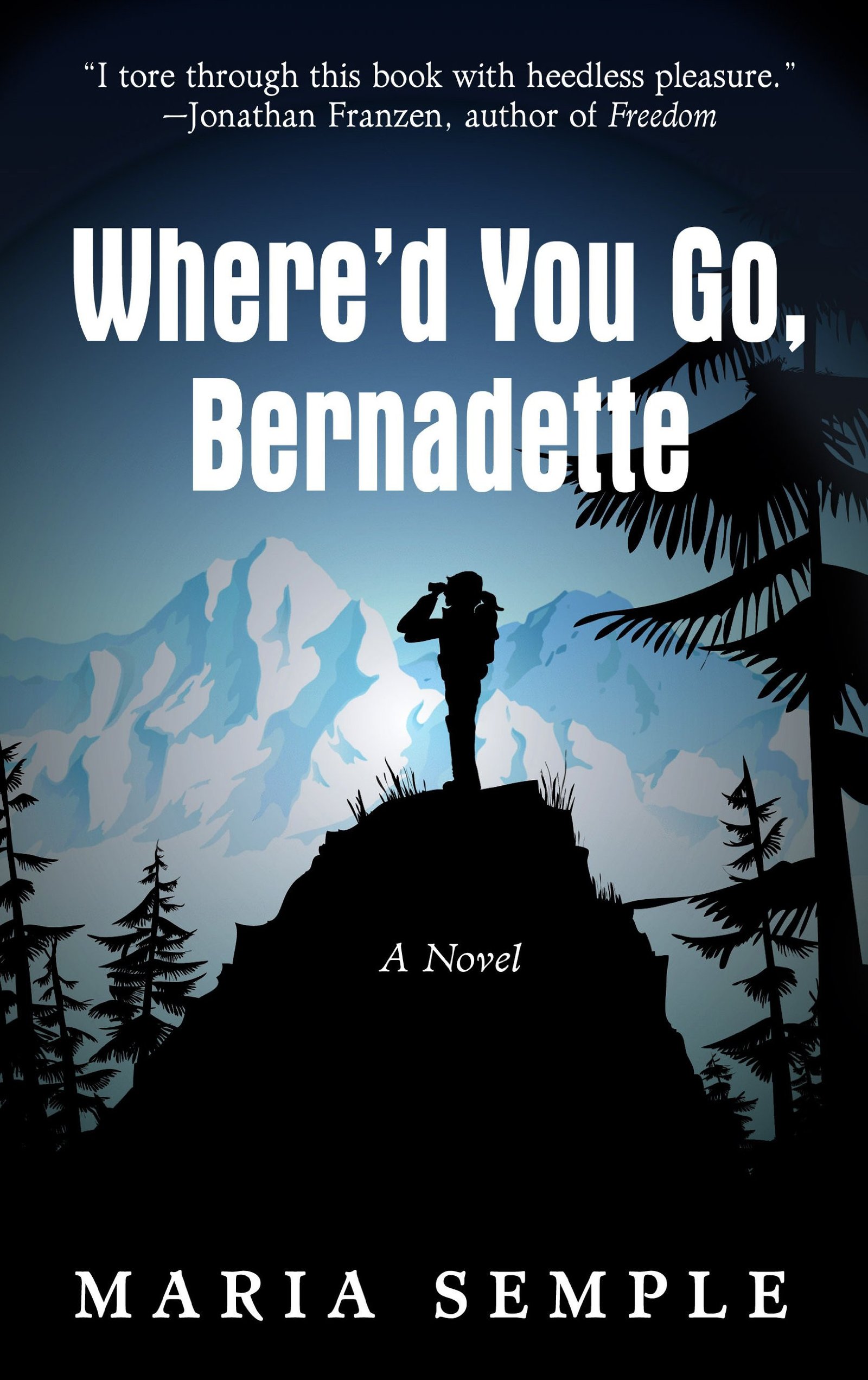
  2. Cover of Where'd You Go, Bernadette by Maria Semple

    Cover not available

    Where'd You Go, Bernadette

    by Maria Semple

    Bernadette Fox is notorious. To her Microsoft-guru husband, she's a fearlessly opinionated partner; to fellow private-school mothers in Seattle, she's a disgrace; to design mavens, she's a revolutionary architect, and to 15-year-old Bee, she is a best friend and, simply, Mom.
    Then Bernadette disappears. It began when Bee aced her report card and claimed her promised reward: a family trip to Antarctica. But Bernadette's intensifying allergy to Seattle--and people in general--has made her so agoraphobic that a virtual assistant in India now runs her most basic errands. A trip to the end of the earth is problematic.
    To find her mother, Bee compiles email messages, official documents, secret correspondence--creating a compulsively readable and touching novel about misplaced genius and a mother and daughter's role in an absurd world.

    Why it's similar

    Both stories feature an unapologetic, hyper-competent female protagonist whose unconventional intellect and refusal to conform alienates conventional suburban society. The narrative tone in both combines sharp social satire with deep emotional warmth.

    What's different

    It is set in modern-day Seattle and told through an epistolary format of emails, letters, and documents, focusing on family dynamics and creative burnout rather than scientific struggle.

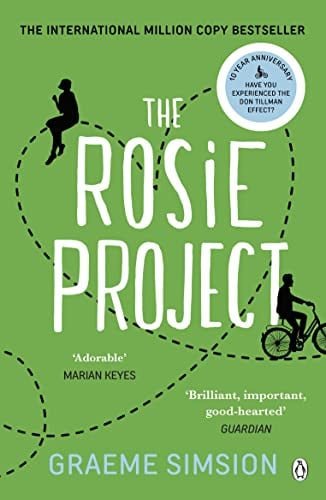
  3. Cover of The Rosie Project by Graeme Simsion

    Cover not available

    The Rosie Project

    by Graeme Simsion

    The Rosie Project by Graeme Simsion is a story about love, life and lobster every Tuesday...

    Don Tillman has got his love life planned out. He knows exactly who he wants, but is it who he needs?

    --------------------------

    'Adorable' Marian Keyes

    'I couldn't put this book down. It's one of the most quirky and endearing romances I've ever read. I laughed the whole way through' Sophie Kinsella

    --------------------------

    Love isn't an exact science - but no one told Don Tillman. A thirty-nine-year-old geneticist, Don's never had a second date. So he devises the Wife Project, a scientific test to find the perfect partner. Enter Rosie - 'the world's most incompatible woman' - throwing Don's safe, ordered life into chaos. But what is this unsettling, alien emotion he's feeling?

    'Marvellous' John Boyne

    'A sweet, funny rom-com . . . You'll be willing Don and Rosie on every step of the way' Marie Claire

    Hilarious, unlikely and heartbreaking' Easy Living

    'Original, clever and perfectly written' Jill Mansell

    Why it's similar

    Both narratives feature a hyper-rational scientist protagonist whose fiercely logical worldview clashes humorously with everyday societal conventions. Each story uses scientific methodology as a lens to navigate human relationships and romance.

    What's different

    Presented as a contemporary romantic comedy from the first-person perspective of a male genetics professor, it focuses on lighthearted dating misadventures rather than systemic gender discrimination.

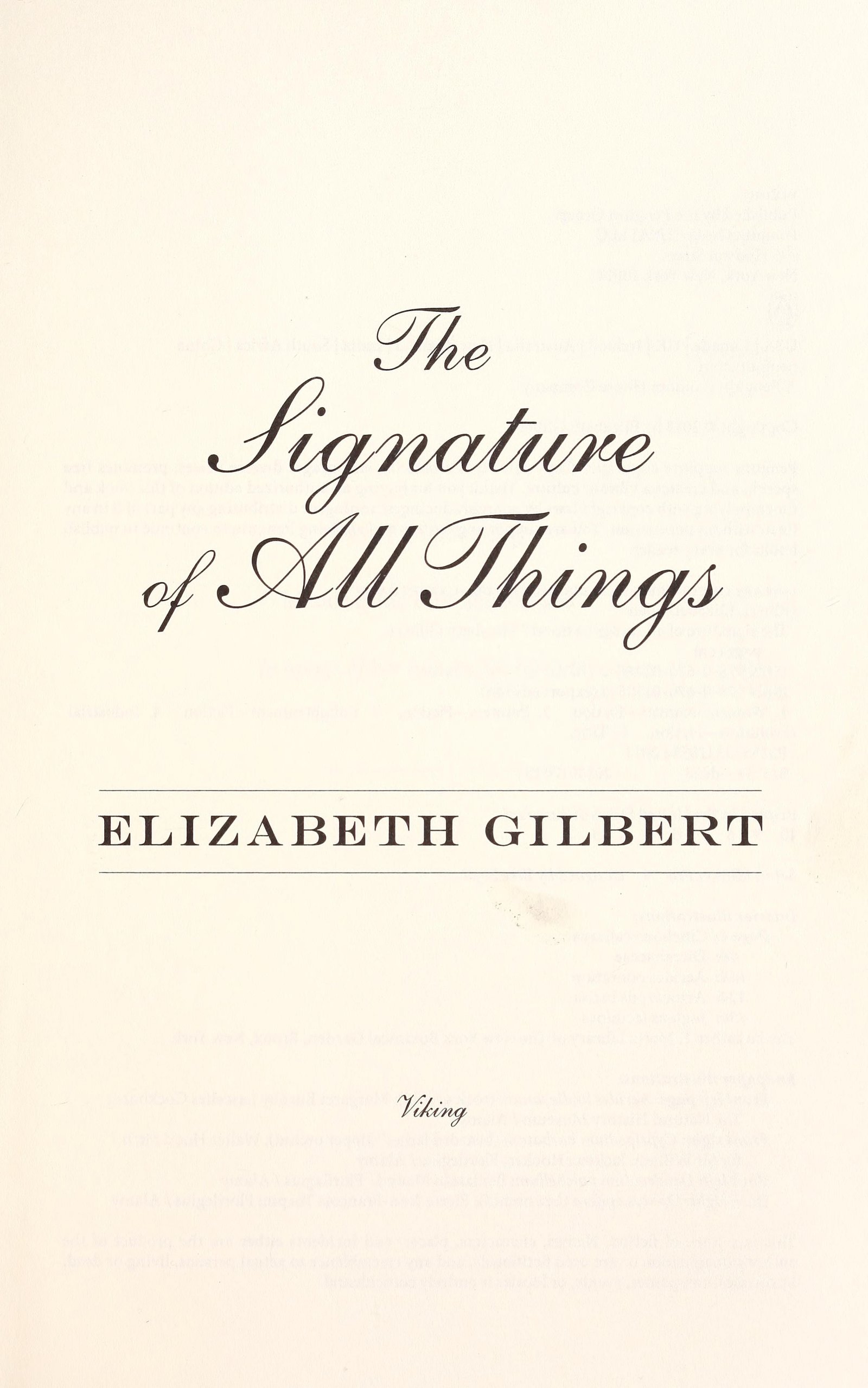
  4. Cover of The Signature of All Things by Elizabeth Gilbert

    Cover not available

    The Signature of All Things

    by Elizabeth Gilbert

    A glorious, sweeping novel of desire, ambition, and the thirst for knowledge, from the # 1 New York Times bestselling author of Eat Pray Love, Big Magic, and City of Girls

    In The Signature of All Things, Elizabeth Gilbert returns to fiction, inserting her inimitable voice into an enthralling story of love, adventure and discovery. Spanning much of the eighteenth and nineteenth centuries, the novel follows the fortunes of the extraordinary Whittaker family as led by the enterprising Henry Whittaker--a poor-born Englishman who makes a great fortune in the South American quinine trade, eventually becoming the richest man in Philadelphia. Born in 1800, Henry's brilliant daughter, Alma (who inherits both her father's money and his mind), ultimately becomes a botanist of considerable gifts herself. As Alma's research takes her deeper into the mysteries of evolution, she falls in love with a man named Ambrose Pike who makes incomparable paintings of orchids and who draws her in the exact opposite direction--into the realm of the spiritual, the divine, and the magical. Alma is a clear-minded scientist; Ambrose a utopian artist--but what unites this unlikely couple is a desperate need to understand the workings of this world and the mechanisms behind all life.

    Exquisitely researched and told at a galloping pace, The Signature of All Things soars across the globe--from London to Peru to Philadelphia to Tahiti to Amsterdam, and beyond. Along the way, the story is peopled with unforgettable characters: missionaries, abolitionists, adventurers, astronomers, sea captains, geniuses, and the quite mad. But most memorable of all, it is the story of Alma Whittaker, who--born in the Age of Enlightenment, but living well into the Industrial Revolution--bears witness to that extraordinary moment in human history when all the old assumptions about science, religion, commerce, and class were exploding into dangerous new ideas. Written in the bold, questing spirit of that singular time, Gilbert's wise, deep, and spellbinding tale is certain to capture the hearts and minds of readers.

    Why it's similar

    Both novels celebrate women driven by scientific passion who relentlessly pursue intellectual breakthroughs despite societal constraints. Each protagonist approaches life through meticulous observation and empirical inquiry.

    What's different

    It is a sprawling 19th-century epic with a deliberate, classic literary pacing, tracking the protagonist across decades and global voyages rather than mid-century American domestic and media culture.

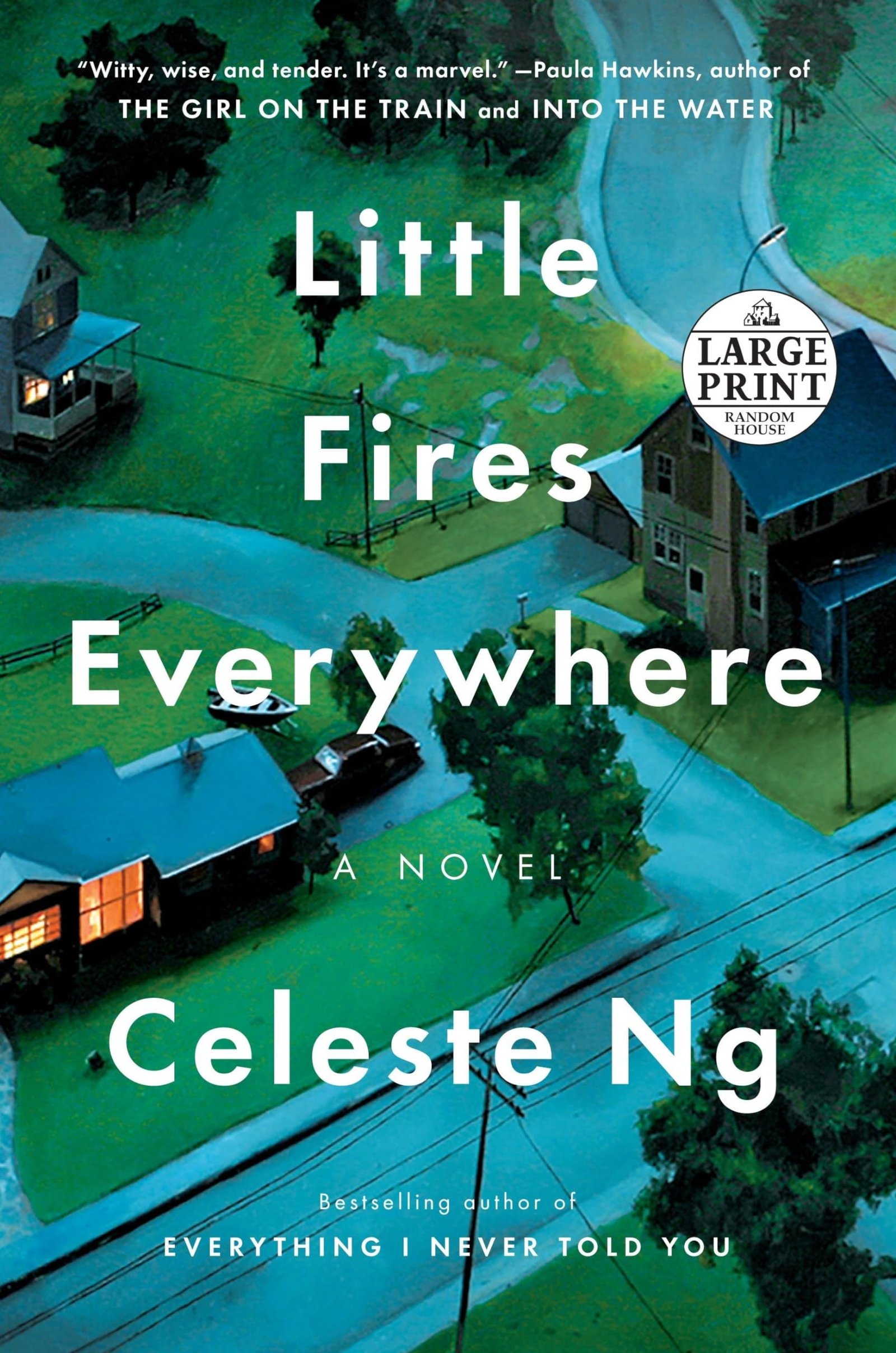
  5. Cover of Little Fires Everywhere by Celeste Ng

    Cover not available

    Little Fires Everywhere

    by Celeste Ng

    The #1 New York Times bestseller!

    “Witty, wise, and tender. It's a marvel.” —Paula Hawkins, author of The Girl on the Train and A Slow Fire Burning

    “To say I love this book is an understatement. It’s a deep psychological mystery about the power of motherhood, the intensity of teenage love, and the danger of perfection. It moved me to tears.” —Reese Witherspoon

    From the bestselling author of Everything I Never Told You and Our Missing Hearts comes a riveting novel that traces the intertwined fates of the picture-perfect Richardson family and the enigmatic mother and daughter who upend their lives.

    In Shaker Heights, a placid, progressive suburb of Cleveland, everything is planned—from the layout of the winding roads, to the colors of the houses, to the successful lives its residents will go on to lead. And no one embodies this spirit more than Elena Richardson, whose guiding principle is playing by the rules.

    Enter Mia Warren—an enigmatic artist and single mother—who arrives in this idyllic bubble with her teenaged daughter Pearl, and rents a house from the Richardsons. Soon Mia and Pearl become more than tenants: all four Richardson children are drawn to the mother-daughter pair. But Mia carries with her a mysterious past and a disregard for the status quo that threatens to upend this carefully ordered community.

    When old family friends of the Richardsons attempt to adopt a Chinese-American baby, a custody battle erupts that dramatically divides the town—and puts Mia and Elena on opposing sides. Suspicious of Mia and her motives, Elena is determined to uncover the secrets in Mia’s past. But her obsession will come at unexpected and devastating costs.

    Little Fires Everywhere explores the weight of secrets, the nature of art and identity, and the ferocious pull of motherhood—and the danger of believing that following the rules can avert disaster.

    Why it's similar

    Both books examine motherhood, female independence, and the pressure to conform in a restrictive mid-century-to-late-20th-century American setting. Each also shows how women navigate institutions and community judgment while challenging gender roles.

    What's different

    Its focus is an ensemble of families in suburban Ohio, with a more layered domestic and legal conflict rather than a single-protagonist career narrative. The style is quieter and more multi-perspective than Lessons in Chemistry.

Looking for something else?

Use our book recommendation tool to discover books similar to any of your favorites.

Find similar books with LibroMatch