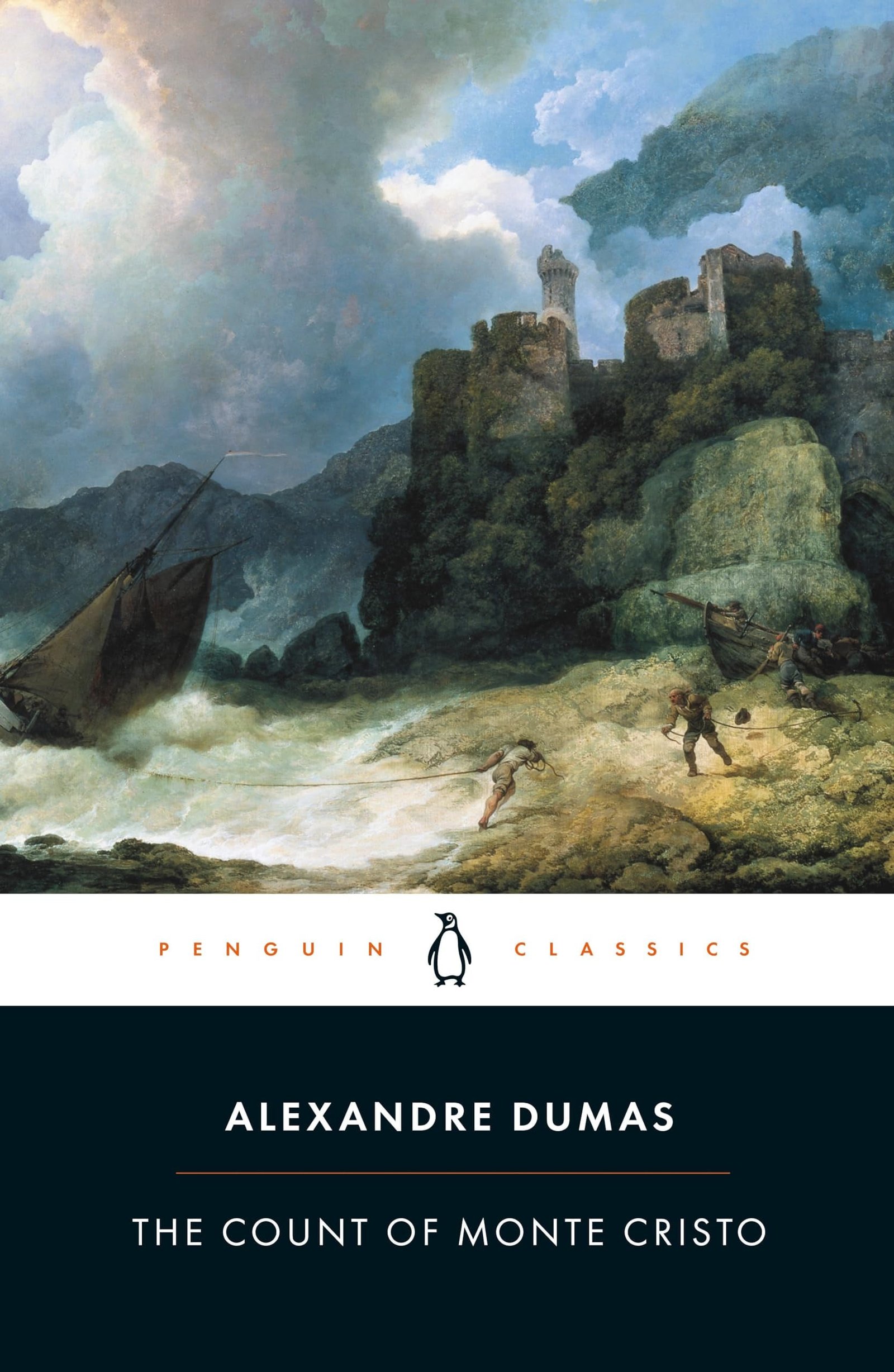
Cover of The Count of Monte Cristo by Alexandre Dumas

4 book recommendations

Books Like “The Count of Monte Cristo” by Alexandre Dumas

Alexandre Dumas's masterpiece captivates readers with its timeless tale of betrayal, patient vengeance, and sweeping adventure. If you crave intricate schemes, relentless justice, and epic journeys of retribution, your literary quest is far from over. Dive into our handpicked recommendations below to find your next unforgettable read.

  1. Cover of Scaramouche by Rafael Sabatini

    Cover not available

    Scaramouche

    by Rafael Sabatini

    Scaramouche is a classic historical adventure novel by Rafael Sabatini, first published in 1921. Set in 17th century Italy, it tells the story of a young man who is driven to seek justice against a powerful and oppressive oppressor. Through thrilling twists and turns, Scaramouche must confront his own inner demons and risk his life to save his people. With thrilling action, a compelling hero, and a deep exploration of justice, Scaramouche is a must-read for fans of historical fiction. Featuring Sabatini's signature swashbuckling style and vivid writing, Scaramouche is sure to captivate readers and leave them with a lasting impression of its timeless themes.

    Rafael Sabatini (1875-1950) was an Italian-born British author of adventure novels and stories in a variety of literary genres. He is best known for his swashbuckling historical novels, including The Sea Hawk, Captain Blood, and Scaramouche. He also wrote plays and short stories, many of which have been adapted into films. Sabatini was born in Jesi, Italy, in 1875 and was the eldest of five children. His father was an opera singer, and his mother was a singer and a language teacher. He was educated in England and Switzerland, where he studied literature, linguistics, and history. Sabatini began writing at a young age and published his first story, “The Tavern Knight,” in 1901. He wrote prolifically throughout his life, and his works were translated into more than 20 languages. His best-known works include The Sea Hawk (1915), Captain Blood (1922), and Scaramouche (1921). The Sea Hawk was adapted into a movie starring Errol Flynn in 1940, and Captain Blood was adapted into a movie starring Errol Flynn in 1935. Sabatini was also well-known for his short stories, many of which were published in magazines such as The Strand Magazine. He wrote plays and one-act operas, and some of his plays were performed in London. Sabatini died in 1950 in Switzerland, and his works continue to be popular today. He is remembered as a master storyteller and for his vivid descriptions of characters, plots, and settings. His works remain an excellent source of entertainment for readers of all ages.

    Why it's similar

    Set in Revolutionary-era France, it mirrors Dumas's swashbuckling adventure style and follows a protagonist who adopts distinct public identities while pursuing a personal vendetta against a powerful aristocrat.

    What's different

    It embraces a more satirical, romantic comedy tone with prominent theatrical themes rather than the dark, brooding, and sprawling machinations that drive Edmond Dantès.

  2. Cover of Best Served Cold by Joe Abercrombie

    Cover not available

    Best Served Cold

    by Joe Abercrombie

    Springtime in Styria. And that means war.

    There have been nineteen years of blood. The ruthless Grand Duke Orso is locked in a vicious struggle with the squabbling League of Eight, and between them they have bled the land white. While armies march, heads roll and cities burn, and behind the scenes bankers, priests and older, darker powers play a deadly game to choose who will be king.

    War may be hell but for Monza Murcatto, the Snake of Talins, the most feared and famous mercenary in Duke Orso's employ, it's a damn good way of making money too. Her victories have made her popular - a shade too popular for her employer's taste. Betrayed, thrown down a mountain and left for dead, Murcatto's reward is a broken body and a burning hunger for vengeance. Whatever the cost, seven men must die.

    Her allies include Styria's least reliable drunkard, Styria's most treacherous poisoner, a mass-murderer obsessed with numbers and a Northman who just wants to do the right thing. Her enemies number the better half of the nation. And that's all before the most dangerous man in the world is dispatched to hunt her down and finish the job Duke Orso started...

    Why it's similar

    It shares the classic revenge structure of an intensely wronged protagonist surviving assassination and systematically hunting down each former ally on a target list.

    What's different

    The setting is a grimdark secondary fantasy world characterized by visceral violence, moral nihilism, and an unromantic depiction of revenge as thoroughly debasing and destructive.

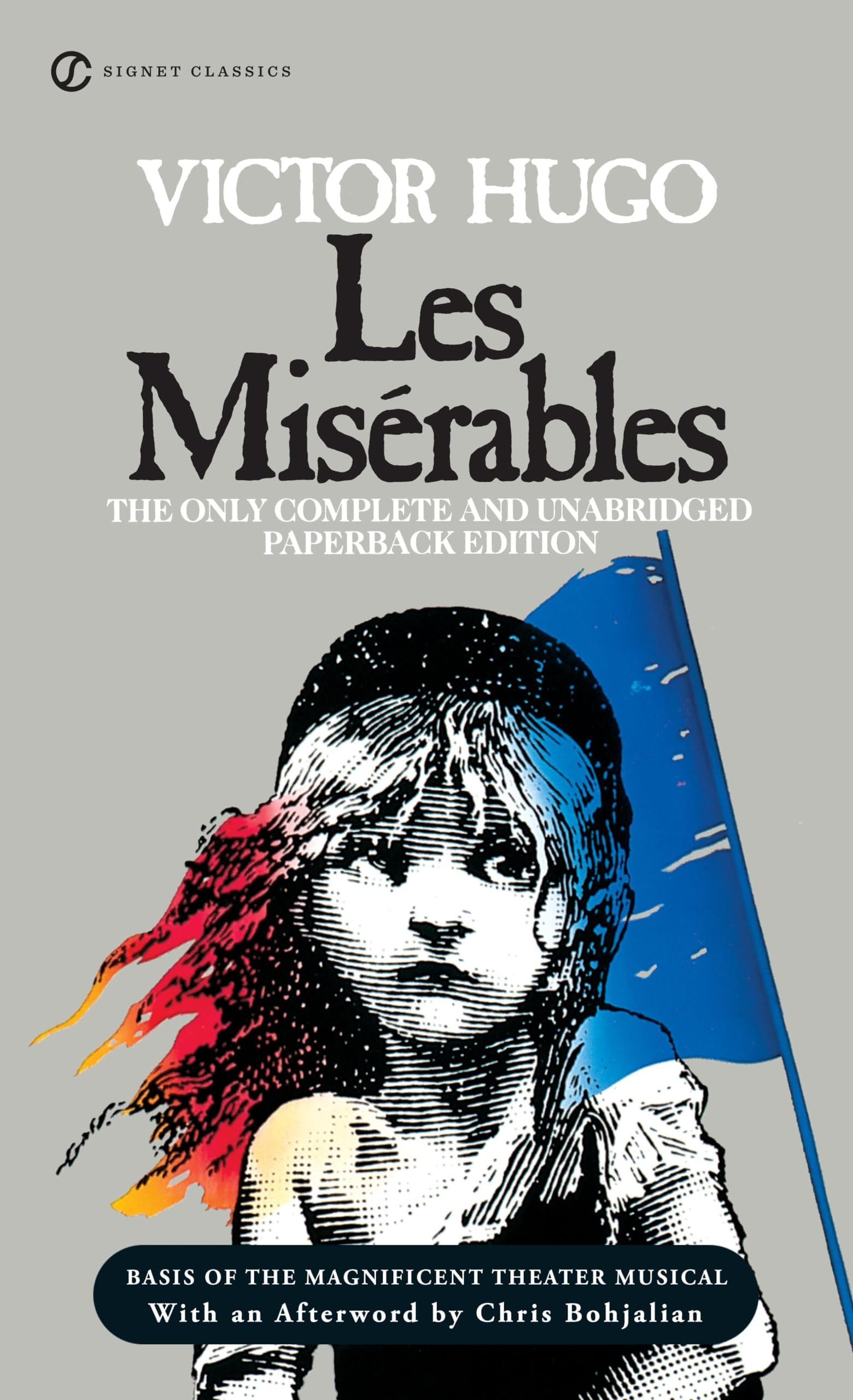
  3. Cover of Les Misérables by Victor Hugo

    Cover not available

    Les Misérables

    by Victor Hugo

    NOW A SIX-PART MINISERIES ON MASTERPIECE ON PBS

    The only completely unabridged paperback edition of Victor Hugo’s masterpiece—a sweeping tale of love, loss, valor, and passion.

    Introducing one of the most famous characters in literature, Jean Valjean—the noble peasant imprisoned for stealing a loaf of bread—Les Misérables ranks among the greatest novels of all time. In it, Victor Hugo takes readers deep into the Parisian underworld, immerses them in a battle between good and evil, and carries them to the barricades during the uprising of 1832 with a breathtaking realism that is unsurpassed in modern prose.

    Within his dramatic story are themes that capture the intellect and the emotions: crime and punishment, the relentless persecution of Valjean by Inspector Javert, the desperation of the prostitute Fantine, the amorality of the rogue Thénardier, and the universal desire to escape the prisons of our own minds. Les Misérables gave Victor Hugo a canvas upon which he portrayed his criticism of the French political and judicial systems, but the portrait that resulted is larger than life, epic in scope—an extravagant spectacle that dazzles the senses even as it touches the heart.

    Translated by Lee Fahnestock and Norman Macafee, based on the classic nineteenth-century Charles E. Wilbour translation

    Why it's similar

    Both are sweeping 19th-century French epic novels following men unjustly imprisoned for years who assume new identities and navigate the intricate social strata of post-Napoleonic France.

    What's different

    Hugo focuses on themes of Christian mercy, social reform, and moral redemption, contrasting directly with Dumas's relentless fixation on retributive justice and vengeance.

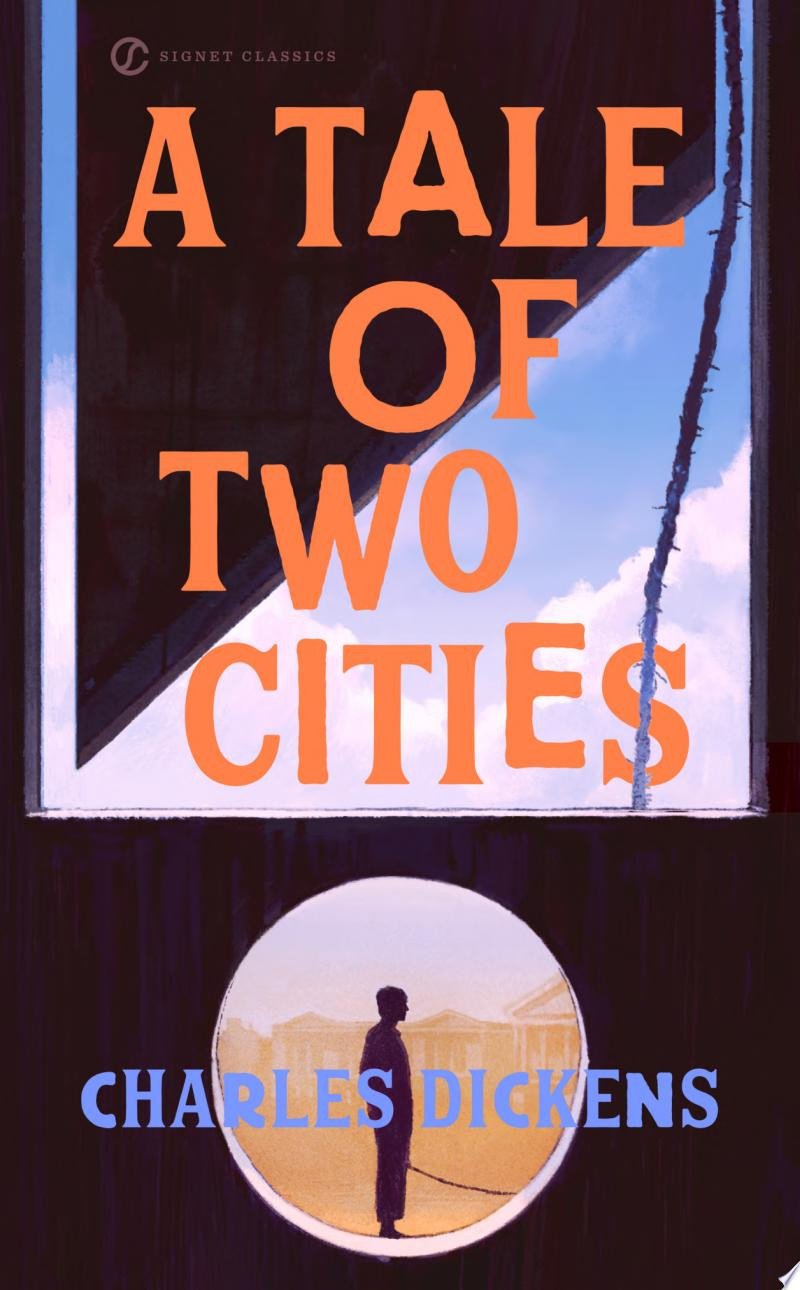
  4. Cover of A Tale of Two Cities by Charles Dickens

    Cover not available

    A Tale of Two Cities

    by Charles Dickens

    The French Revolution comes to vivid life in Charles Dickens's famous novel about the best of times and the worst of times...

    The storming of the Bastille…the death carts with their doomed human cargo…the swift drop of the guillotine blade—this is the French Revolution that Charles Dickens vividly captures in his famous work A Tale of Two Cities. With dramatic eloquence, he brings to life a time of terror and treason, a starving people rising in frenzy and hate to overthrow a corrupt and decadent regime. With insight and compassion, Dickens casts his novel of unforgettable scenes with some memorable characters: the sinister Madame Defarge, knitting her patterns of death; the gentle Lucie Manette, unswerving in her devotion to her broken father; Charles Darnay, the lover with a secret past; and dissolute Sydney Carton, whose unlikely heroism gives his life meaning.

    Why it's similar

    Both are historical novels set around revolutionary France, featuring unjust imprisonment, identity transformations, and dramatic schemes driven by personal sacrifice and the desire to right past wrongs.

    What's different

    The narrative alternates between London and Paris and emphasizes sacrifice and tragedy over triumphant revenge, giving the ending a more somber, bittersweet tone.

Looking for something else?

Use our book recommendation tool to discover books similar to any of your favorites.

Find similar books with LibroMatch