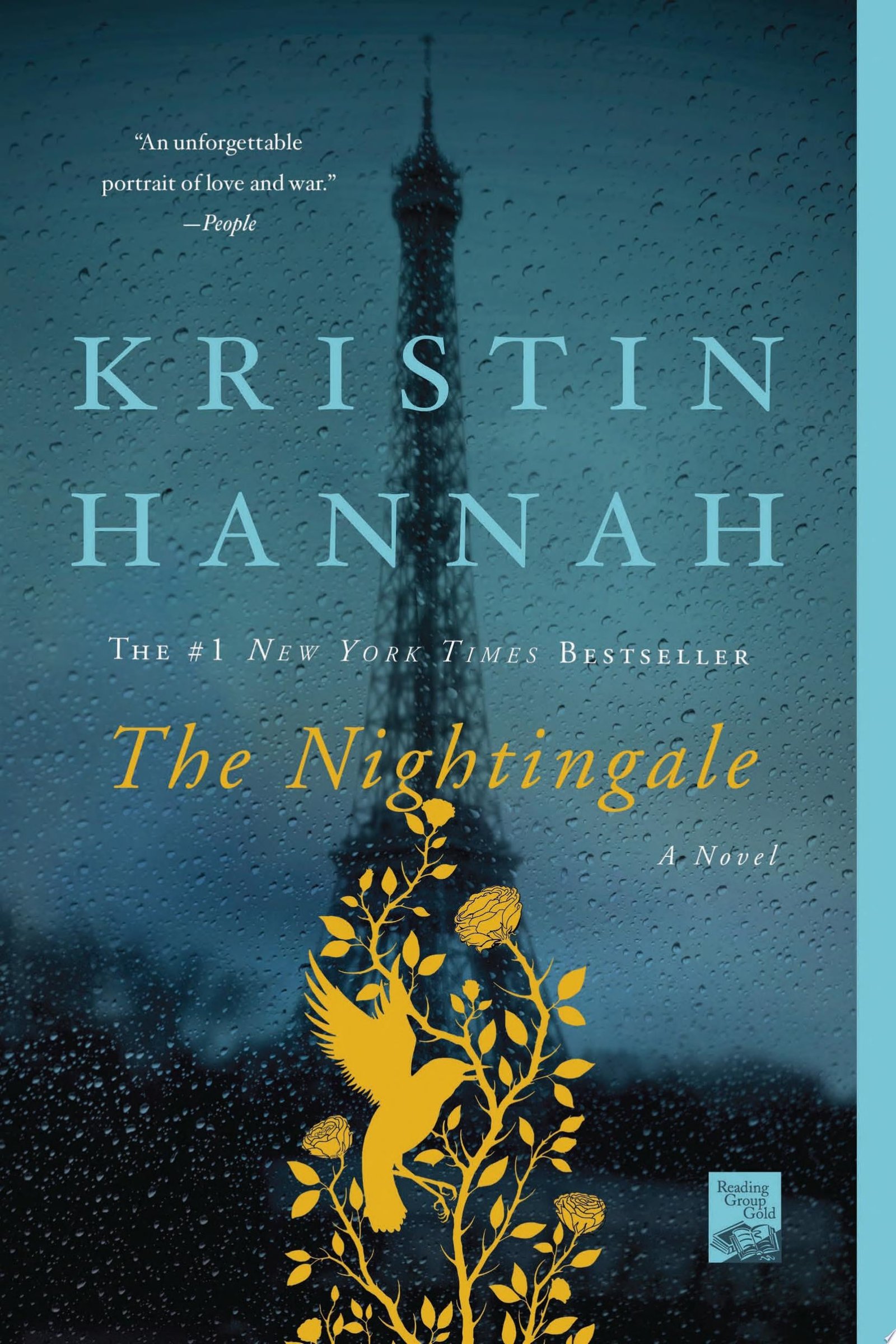
Cover of The Nightingale by Kristin Hannah

5 book recommendations

Books Like “The Nightingale” by Kristin Hannah

If the breathtaking courage, sisterhood, and heartbreak of The Nightingale captured your soul, you are not alone. Readers everywhere fell in love with this World War II masterpiece and its fierce testament to women's quiet resilience. Dive into our handpicked collection below to discover your next unforgettable, emotionally gripping read.

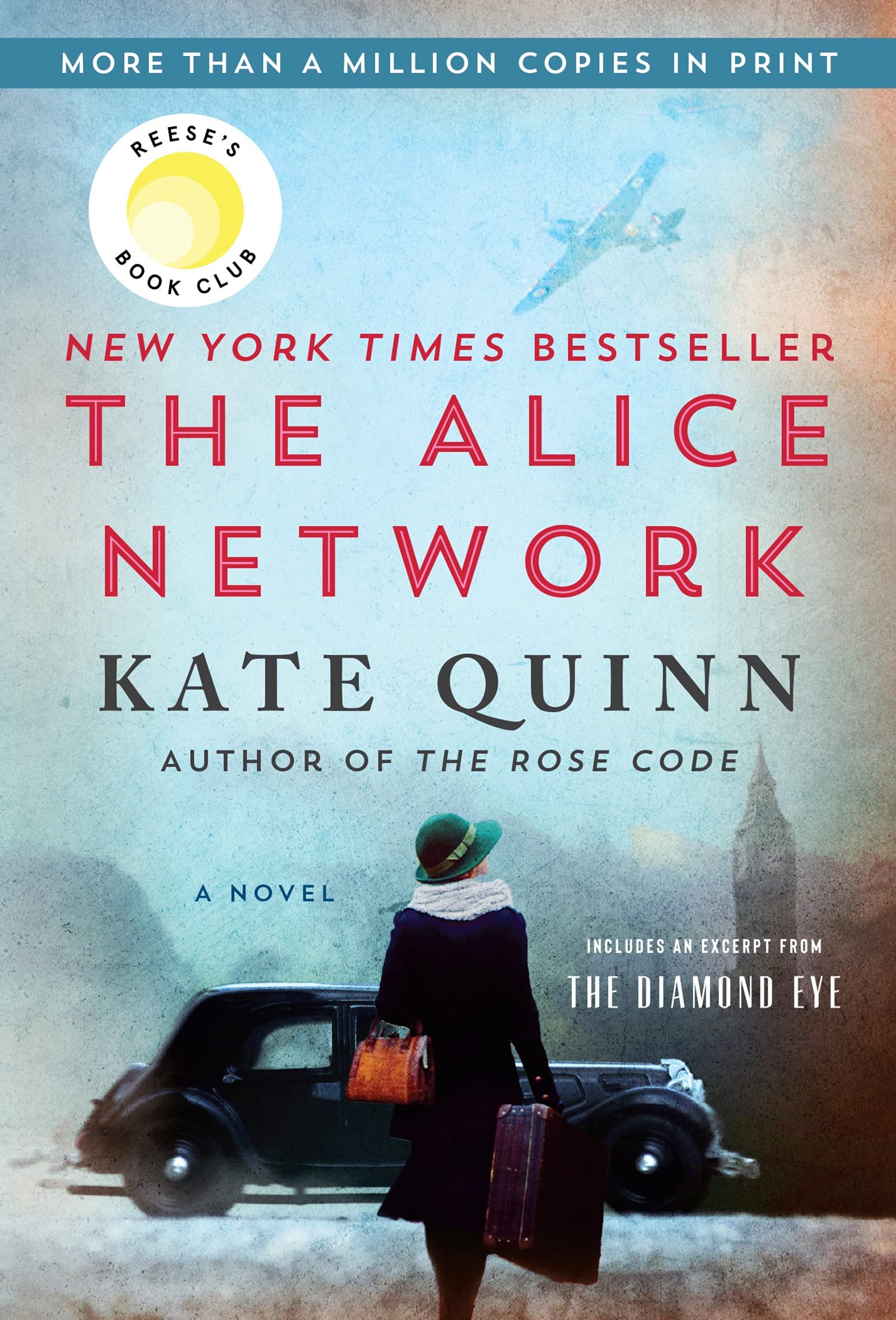
  1. Cover of The Alice Network by Kate Quinn

    Cover not available

    The Alice Network

    by Kate Quinn

    In an enthralling new historical novel from national bestselling author Kate Quinn, two women--a female spy recruited to the real-life Alice Network in France during World War I and an unconventional American socialite searching for her cousin in 1947--are brought together in a mesmerizing story of courage and redemption.

    1947. In the chaotic aftermath of World War II, American college girl Charlie St. Clair is pregnant, unmarried, and on the verge of being thrown out of her very proper family. She's also nursing a desperate hope that her beloved cousin Rose, who disappeared in Nazi-occupied France during the war, might still be alive. So when Charlie's parents banish her to Europe to have her "little problem" taken care of, Charlie breaks free and heads to London, determined to find out what happened to the cousin she loves like a sister.

    1915. A year into the Great War, Eve Gardiner burns to join the fight against the Germans and unexpectedly gets her chance when she's recruited to work as a spy. Sent into enemy-occupied France, she's trained by the mesmerizing Lili, the "Queen of Spies", who manages a vast network of secret agents right under the enemy's nose.

    Thirty years later, haunted by the betrayal that ultimately tore apart the Alice Network, Eve spends her days drunk and secluded in her crumbling London house. Until a young American barges in uttering a name Eve hasn't heard in decades, and launches them both on a mission to find the truth...no matter where it leads.

    "Both funny and heartbreaking, this epic journey of two courageous women is an unforgettable tale of little-known wartime glory and sacrifice. Quinn knocks it out of the park with this spectacular book!"--Stephanie Dray, New York Times bestselling author of America's First Daughter

    Why it's similar

    Both novels center on the courageous, clandestine roles of women resisting enemy occupation in wartime France, emphasizing female agency and sacrifice.

    What's different

    Quinn's novel utilizes a dual-timeline mystery structure spanning World War I and 1947, presenting a faster-paced spy-thriller tone rather than a purely chronological domestic drama.
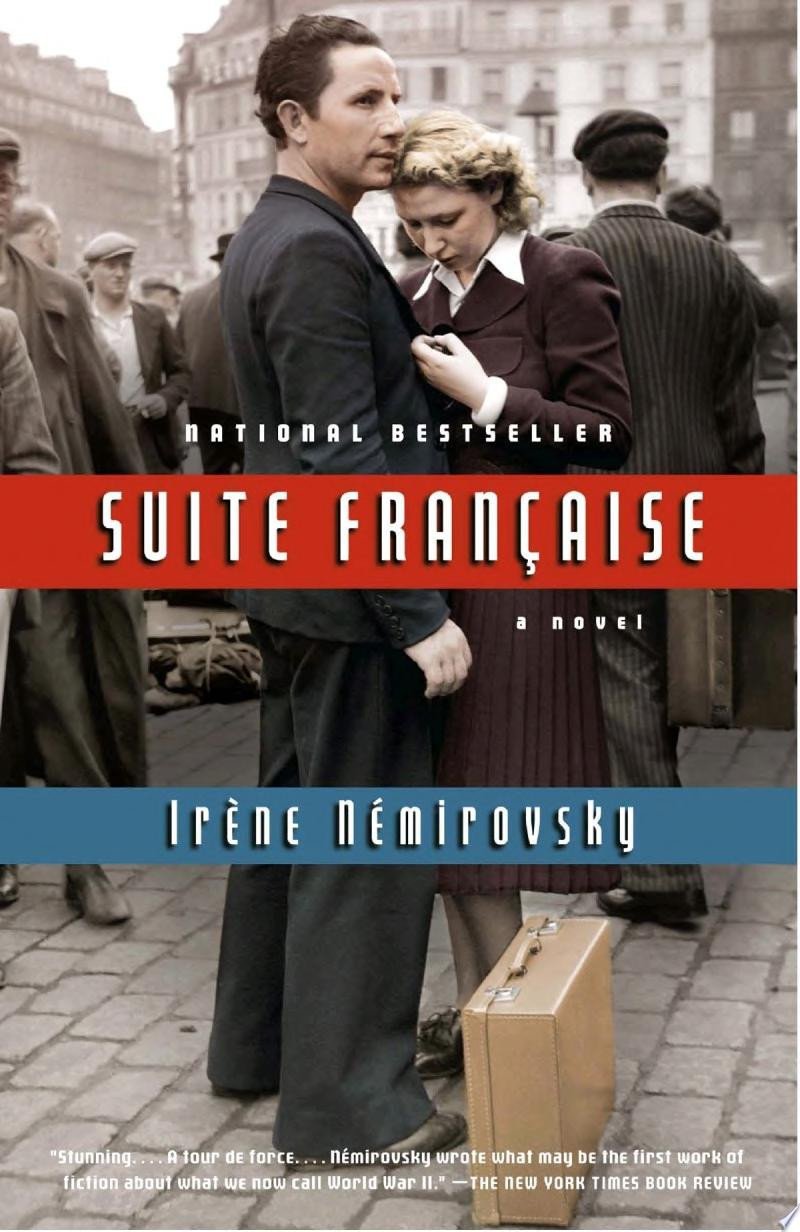
  2. Cover of Suite Française by Irène Némirovsky

    Cover not available

    Suite Française

    by Irène Némirovsky

    NATIONAL BESTSELLER • The remarkable story of men and women thrown together in circumstances beyond their control during World War II—a heartrending "portrait of a small French town under seige, and the people trying to survive, even to live, as Hitler’s horrors march closer and closer to their doors" (New York).

    “Stunning.... A tour de force.” —The New York Times Book Review

    Beginning in Paris on the eve of the Nazi occupation in 1940, as Parisians flee the city, human folly surfaces in every imaginable way: a wealthy mother searches for sweets in a town without food; a couple is terrified at the thought of losing their jobs, even as their world begins to fall apart. Moving on to a provincial village now occupied by German soldiers, the locals must learn to coexist with the enemy—in their town, their homes, even in their hearts.

    When Irène Némirovsky began working on Suite Française, she was already a highly successful writer living in Paris. But she was also a Jew, and in 1942 she was arrested and deported to Auschwitz, where she died. For sixty-four years, this novel remained hidden and unknown.

    Why it's similar

    Both novels portray the daily moral ambiguities, quiet resistance, and social disruption experienced by French civilians during the German invasion and occupation.

    What's different

    Written contemporaneously in the 1940s as events unfolded, it offers a stark, satirical social critique rather than an emotionally dramatic, retrospectively structured epic.

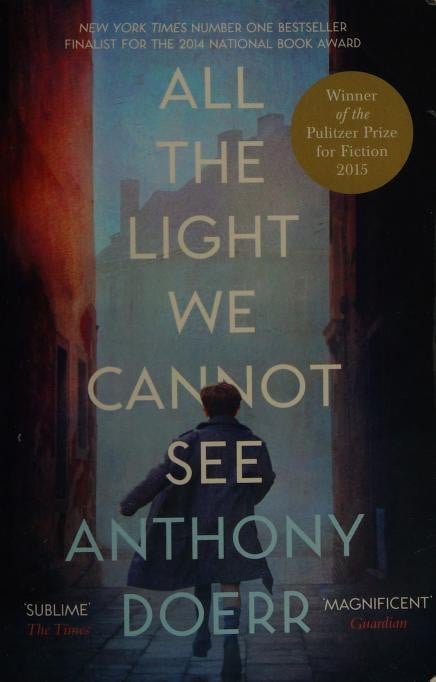
  3. Cover of All the Light We Cannot See by Anthony Doerr

    Cover not available

    All the Light We Cannot See

    by Anthony Doerr

    "From the highly acclaimed, multiple award-winning Anthony Doerr, a stunningly ambitious and beautiful novel about a blind French girl and a German boy whose paths collide in occupied France as both try to survive the devastation of World War II. Marie Laure lives with her father in Paris within walking distance of the Museum of Natural History where he works as the master of the locks (there are thousands of locks in the museum). When she is six, she goes blind, and her father builds her a model of their neighborhood, every house, every manhole, so she can memorize it with her fingers and navigate the real streets with her feet and cane. When the Germans occupy Paris, father and daughter flee to Saint-Malo on the Brittany coast, where Marie-Laure's agoraphobic great uncle lives in a tall, narrow house by the sea wall. In another world in Germany, an orphan boy, Werner, grows up with his younger sister, Jutta, both enchanted by a crude radio Werner finds. He becomes a master at building and fixing radios, a talent that wins him a place at an elite and brutal military academy and, ultimately, makes him a highly specialized tracker of the Resistance. Werner travels through the heart of Hitler Youth to the far-flung outskirts of Russia, and finally into Saint-Malo, where his path converges with Marie-Laure. Doerr's gorgeous combination of soaring imagination with observation is electric. Deftly interweaving the lives of Marie-Laure and Werner, Doerr illuminates the ways, against all odds, people try to be good to one another. Ten years in the writing, All the Light We Cannot See is his most ambitious and dazzling work".

    Why it's similar

    Both are World War II historical novels that follow young French civilians under German occupation, highlighting ordinary people’s courage, moral choices, and the impact of war on families.

    What's different

    The narrative is more impressionistic and fragmented, with a stronger focus on sensory detail and the philosophical cost of war than on intimate family drama.

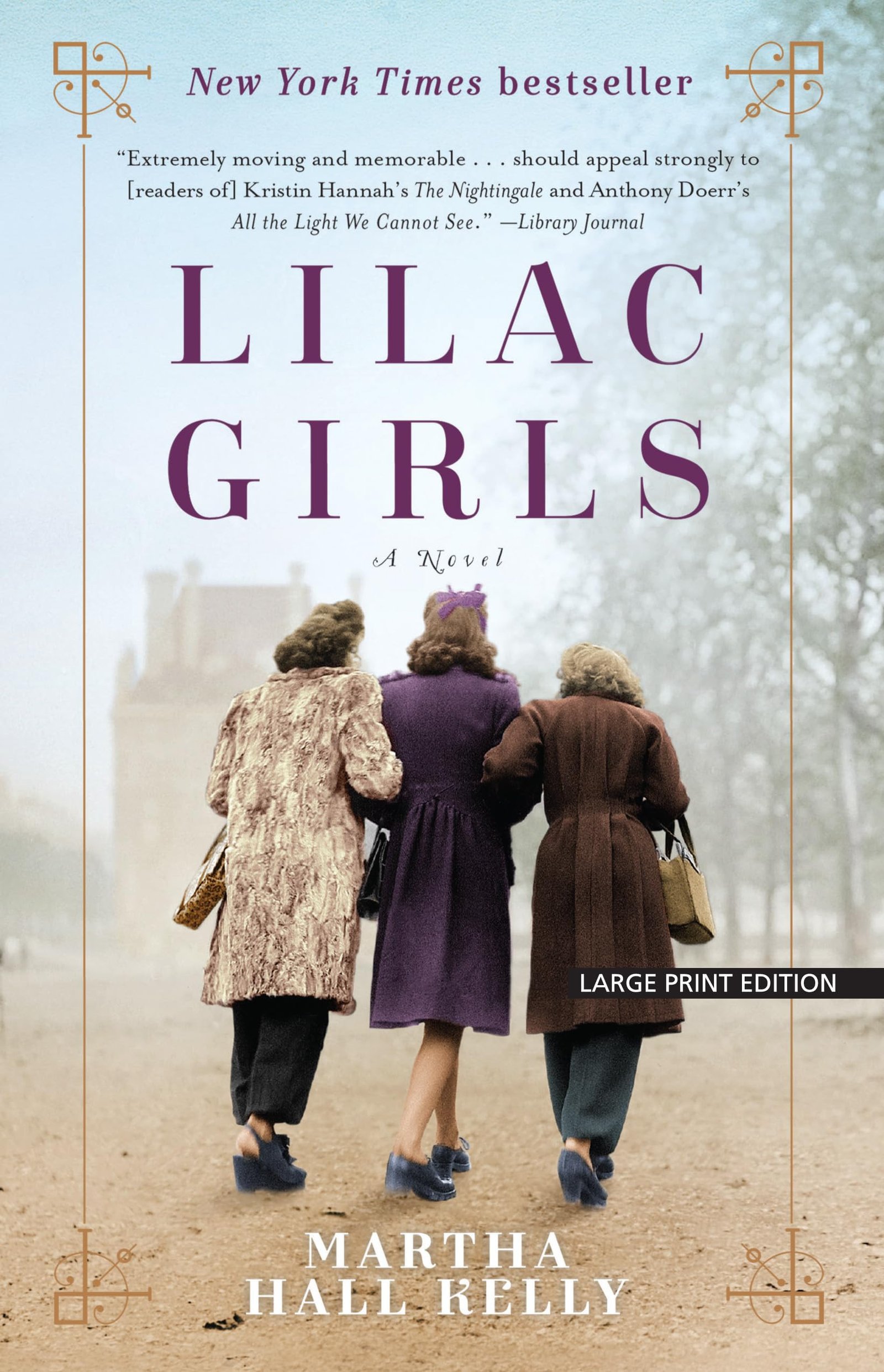
  4. Cover of Lilac Girls by Martha Hall Kelly

    Cover not available

    Lilac Girls

    by Martha Hall Kelly

    Manhattan, 1939. New York socialite Caroline Ferriday's biggest problem is resisting the advances of a married actor. Across the Atlantic Kasia Kuzmerick, a Polish Catholic teenager, is affected when Germany declares war on Poland. As tensions rise Caroline's interest in aiding the war effort in France grows; she hears about the dire situation at the Ravensbrück all-female concentration camp. Kasia's carefree youth is replaced by a fervor for the Polish resistance movement. Through Ravensbrück -- and the horrific atrocities taking place there told in part by an infamous German surgeon, Herta Oberheuser -- the two women's lives converge in unprecedented ways.

    Why it's similar

    Both center on women’s experiences in World War II, explore resistance and survival under Nazi brutality, and emphasize the bonds between women and the lasting trauma of war.

    What's different

    Its scope is broader and grittier, spending more time in the Ravensbrück concentration camp and alternating among three women in different countries, which creates a more overtly harrowing, documentary-like feel.

  5. Cover of Sarah’s Key by Tatiana de Rosnay

    Cover not available

    Sarah’s Key

    by Tatiana de Rosnay

    A New York Times bestseller. Paris, July 1942: Sarah, a ten year-old girl, is brutally arrested with her family by the French police in the Vel’ d’Hiv’ roundup, but not before she locks her younger brother in a cupboard in the family's apartment, thinking that she will be back within a few hours.
    Paris, May 2002: On Vel’ d’Hiv’s 60th anniversary, journalist Julia Jarmond is asked to write an article about this black day in France's past. Through her contemporary investigation, she stumbles onto a trail of long-hidden family secrets that connect her to Sarah. Julia finds herself compelled to retrace the girl's ordeal, from that terrible term in the Vel d'Hiv', to the camps, and beyond. As she probes into Sarah's past, she begins to question her own place in France, and to reevaluate her marriage and her life.
    Tatiana de Rosnay offers us a brilliantly subtle, compelling portrait of France under occupation and reveals the taboos and silence that surround this painful episode.

    Why it's similar

    Both are World War II–era novels set in France that intertwine personal and historical tragedy, showing how choices made during the occupation reverberate across generations.

    What's different

    It alternates between a contemporary investigation and historical sections, so the emotional impact comes partly from uncovering the past rather than living it in real time as in The Nightingale.

Looking for something else?

Use our book recommendation tool to discover books similar to any of your favorites.

Find similar books with LibroMatch