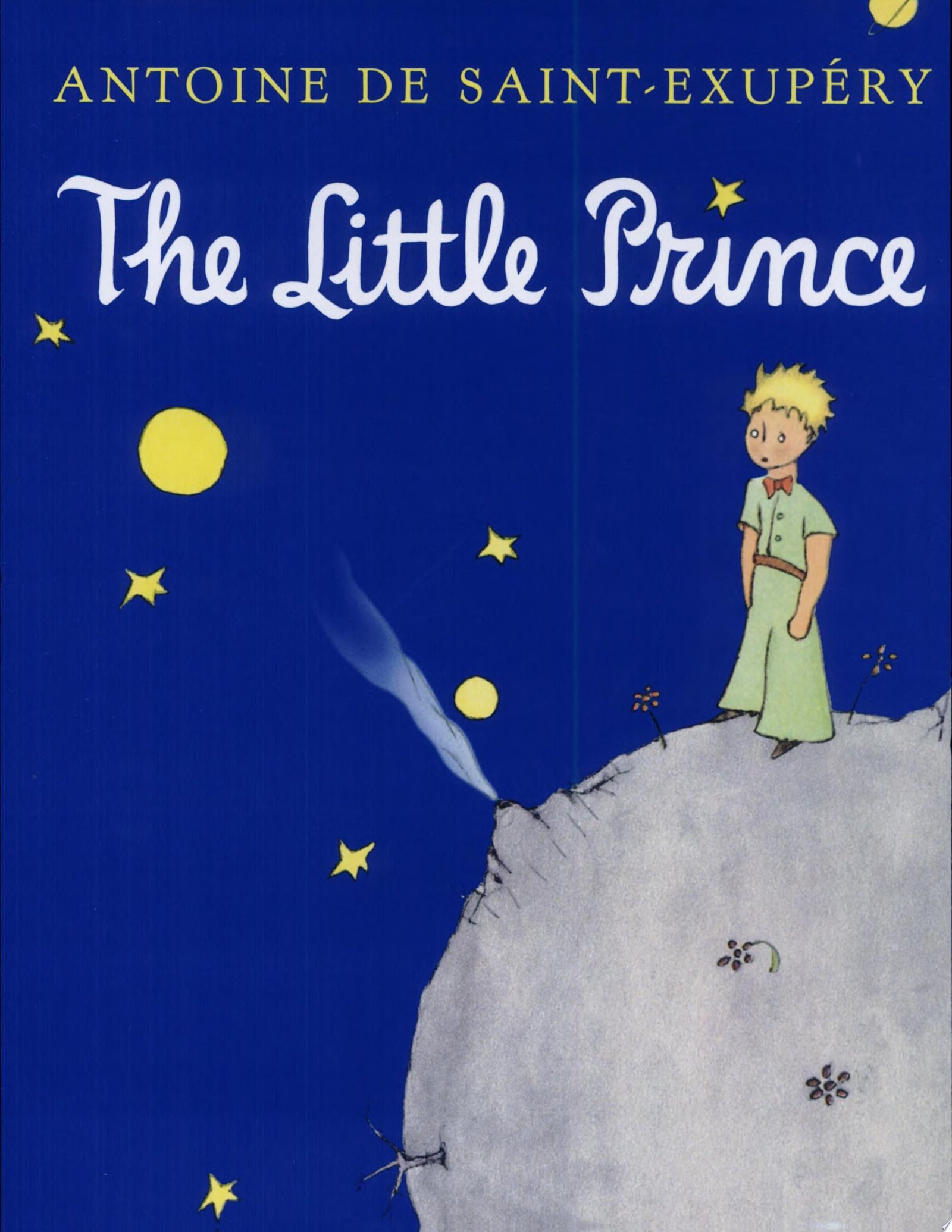
Cover of The Little Prince by Antoine de Saint-Exupéry

5 book recommendations

Books Like “The Little Prince” by Antoine de Saint-Exupéry

Readers cherish The Little Prince for its timeless blend of childlike wonder and profound philosophical wisdom on love, friendship, and human nature. If you long for poetic allegories that speak directly to the soul, you have come to the right place. Explore our curated recommendations to discover your next deeply moving read.

  1. Cover of The Phantom Tollbooth by Norton Juster

    Cover not available

    The Phantom Tollbooth

    by Norton Juster

    With almost 5 million copies sold 60 years after its original publication, generations of readers have now journeyed with Milo to the Lands Beyond in this beloved classic. Enriched by Jules Feiffer’s splendid illustrations, the wit, wisdom, and wordplay of Norton Juster’s offbeat fantasy are as beguiling as ever.

    “Comes up bright and new every time I read it . . . it will continue to charm and delight for a very long time yet. And teach us some wisdom, too.” --Phillip Pullman

    For Milo, everything’s a bore. When a tollbooth mysteriously appears in his room, he drives through only because he’s got nothing better to do. But on the other side, things seem different. Milo visits the Island of Conclusions (you get there by jumping), learns about time from a ticking watchdog named Tock, and even embarks on a quest to rescue Rhyme and Reason. Somewhere along the way, Milo realizes something astonishing. Life is far from dull. In fact, it’s exciting beyond his wildest dreams!

    Why it's similar

    Both books feature a young traveler journeying through whimsical, allegorical lands where encounters with eccentric figures satirize adult absurdities and rigid thinking. Both champion curiosity and the importance of looking at the world with fresh perspective.

    What's different

    Juster's tone is lively, comedic, and driven by linguistic wordplay and logic puzzles, contrasting with the tender, melancholic, and contemplative atmosphere of Saint-Exupéry's work.

  2. Cover of The Boy, the Mole, the Fox and the Horse by Charlie Mackesy

    Cover not available

    The Boy, the Mole, the Fox and the Horse

    by Charlie Mackesy

    In this beautiful book, follow the tale of a curious boy, a greedy mole, a wary fox and a wise horse who find themselves together in sometimes difficult terrain, sharing their greatest fears and biggest discoveries about vulnerability, kindness, hope, friendship and love.

    \"A wonderful work of art and a wonderful window into the human heart.\" Richard Curtis

    Why it's similar

    Both are illustrated, gently philosophical works centered on innocence, loneliness, and the transformative power of friendship. Each conveys universal life lessons through tender conversations between a boy and animal companions.

    What's different

    Mackesy's book functions primarily as a curated collection of standalone aphorisms without a structured plot, whereas Saint-Exupéry weaves his philosophical insights into an episodic narrative arc.

  3. Cover of The Alchemist by Paulo Coelho

    Cover not available

    The Alchemist

    by Paulo Coelho

    Combining magic, mysticism, wisdom and wonder into an inspiring tale of self-discovery, The Alchemist has become a modern classic, selling millions of copies around the world and transforming the lives of countless readers across generations.

    Paulo Coelho's masterpiece tells the mystical story of Santiago, an Andalusian shepherd boy who yearns to travel in search of a worldly treasure. His quest will lead him to riches far different—and far more satisfying—than he ever imagined. Santiago's journey teaches us about the essential wisdom of listening to our hearts, of recognizing opportunity and learning to read the omens strewn along life's path, and, most importantly, to follow our dreams.

    Why it's similar

    Both use fable-like, deceptively simple narratives about a lone traveler to explore themes of self-discovery, the meaning of life, and listening to the heart rather than conventional wisdom.

    What's different

    The Alchemist is a longer, more explicitly allegorical spiritual quest with a clear hero’s journey structure and a slightly more adult-oriented tone.

  4. Cover of Siddhartha by Hermann Hesse

    Cover not available

    Siddhartha

    by Hermann Hesse

    When Herman Hesse visited India in the early days of the 20th century, he was captivated by the people, their customs, their culture, and their religion. On returning to Germany, he wrote a masterpiece on a young man's search for identity and meaning in a civilization that has lost its way. Loosely based on the early life of the Buddha, the book documents the journey of self-discovery and spiritual awakening of a character called Siddhartha.

    Why it's similar

    Both are concise, philosophical narratives about a search for wisdom and inner peace, emphasizing direct experience, simplicity, and the limitations of conventional adult thinking.

    What's different

    Siddhartha is written in a more meditative, adult literary style and follows a full life journey rooted in Eastern spiritual traditions rather than a whimsical, planetary fable.

  5. Cover of Sophie's World by Jostein Gaarder

    Cover not available

    Sophie's World

    by Jostein Gaarder

    The international bestseller about life, the universe and everything.

    'A simply wonderful, irresistible book' DAILY TELEGRAPH

    'A terrifically entertaining and imaginative story wrapped round its tough, thought-provoking philosophical heart' DAILY MAIL

    'Remarkable ... an extraordinary achievement' SUNDAY TIMES

    When 14-year-old Sophie encounters a mysterious mentor who introduces her to philosophy, mysteries deepen in her own life. Why does she keep getting postcards addressed to another girl? Who is the other girl? And who, for that matter, is Sophie herself? To solve the riddle, she uses her new knowledge of philosophy, but the truth is far stranger than she could have imagined.

    An addictive blend of mystery, philosophy and fantasy, Sophie's World is an international phenomenon which has been translated into 60 languages and sold more than 40 million copies.

    Why it's similar

    Both feature a young protagonist guided by an enigmatic figure and use accessible storytelling to introduce big philosophical questions about existence, reality, and how we see the world.

    What's different

    Sophie's World has a more didactic, textbook-like structure, systematically surveying Western philosophy and involving a metafictional mystery that is more complex than The Little Prince.

Looking for something else?

Use our book recommendation tool to discover books similar to any of your favorites.

Find similar books with LibroMatch