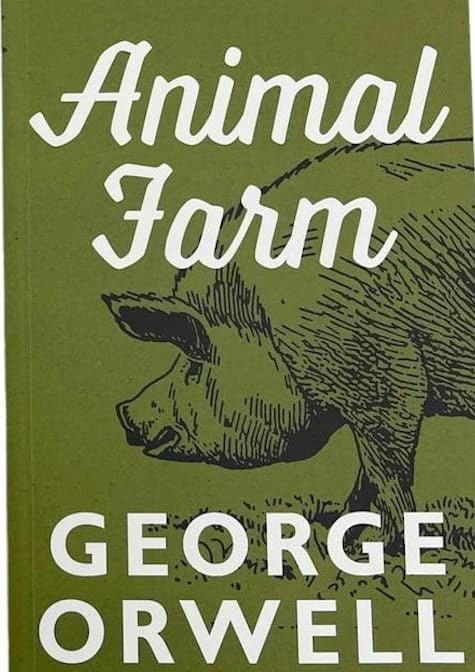
Cover of Animal Farm by George Orwell

5 book recommendations

Books Like “Animal Farm” by George Orwell

Readers are drawn to Animal Farm for its biting political satire, allegorical brilliance, and chilling exploration of unchecked power. If you are searching for thought-provoking stories that challenge authority and probe human nature, you are in the right place. Explore our curated selection below to discover your next gripping read.

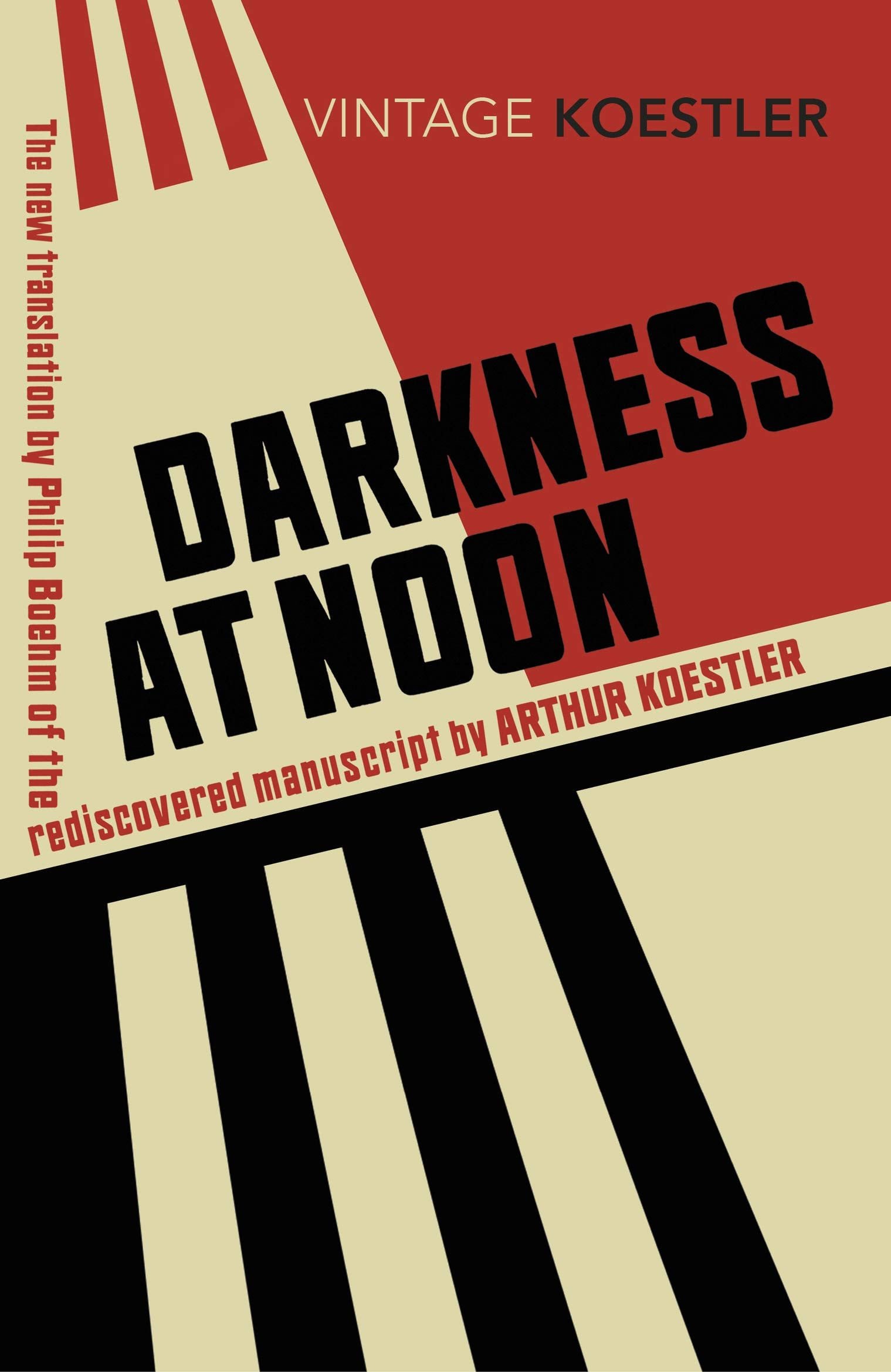
  1. Cover of Darkness at Noon by Arthur Koestler

    Cover not available

    Darkness at Noon

    by Arthur Koestler

    A brilliant new translation of Koestler's long-lost original manuscript. A chilling and unforgettable 20th century classic.

    From a prison cell in an unnamed country run by a totalitarian government Rubashov reflects. Once a powerful player in the regime, mercilessly dispensing with anyone who got in the way of his party's aims, Rubashov has had the tables turned on him. He has been arrested and he'll be interrogated, probably tortured and certainly executed.

    Darkness at Noon is as gripping as a thriller and a seminal work of twentieth-century literature. Published in Great Britain in 1940, it was feted by George Orwell, went on to be translated into thirty languages and is considered the finest work of pre-eminent European master, Arthur Koestler. And yet the novel's worldwide reputation has, for over seventy years, been based on the first incomplete and inexpert English translation - Koestler's original manuscript was lost when he fled the German occupation of Paris in 1940.

    In 2016, a student discovered that long-lost manuscript in a Zurich archive. At last, with the publication of this new translation of the rediscovered original, Koestler's masterpiece can be experienced afresh and in its entirety for the first time.

    Why it's similar

    Both works serve as direct political critiques of the Soviet purges and Moscow Show Trials, illustrating how revolutionary ideals are perverted by paranoid totalitarian leaders.

    What's different

    Koestler presents a grim, realistic psychological drama following an imprisoned revolutionary's internal deliberations rather than a concise, satirical animal fable.
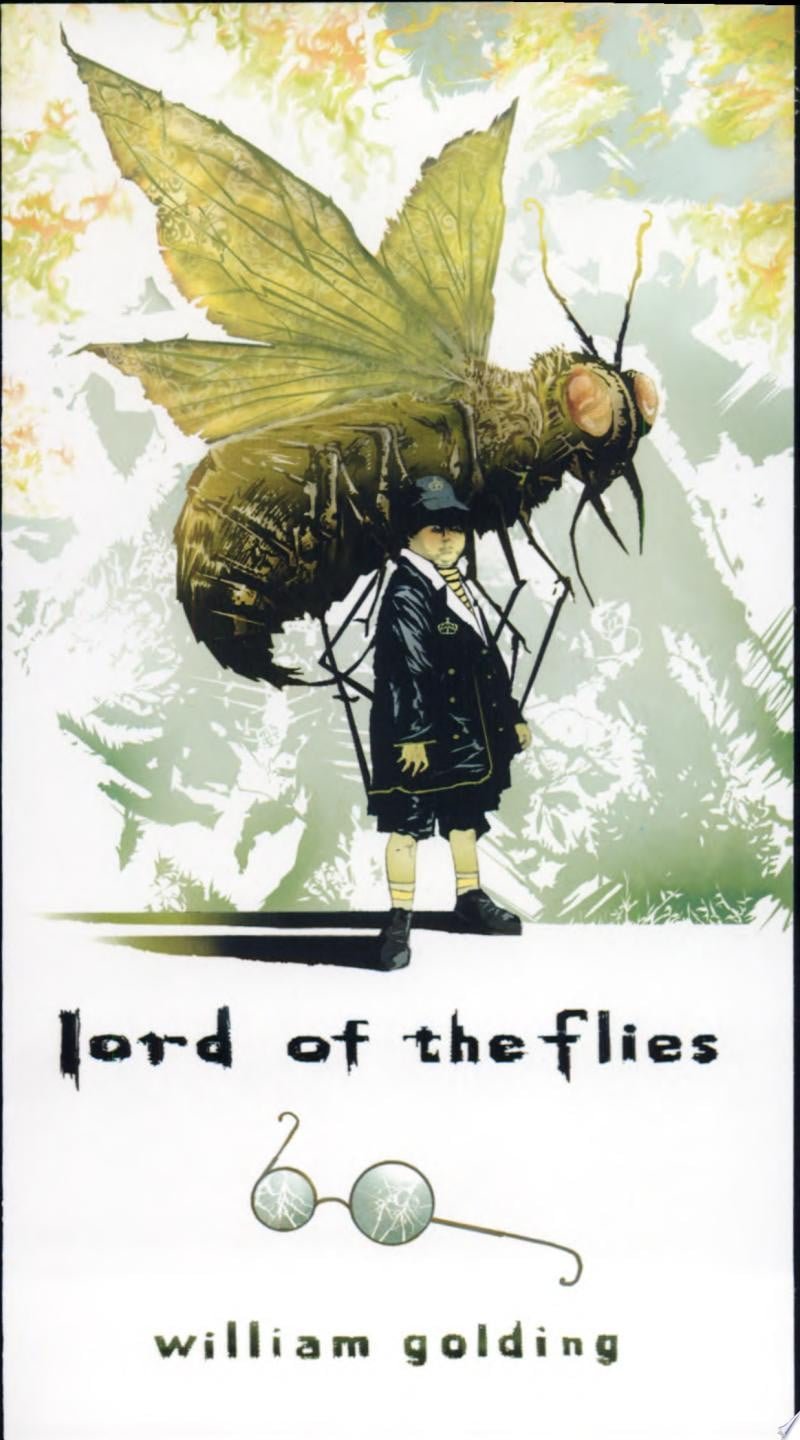

  2. Cover of Lord of the Flies by William Golding

    Cover not available

    Lord of the Flies

    by William Golding

    Golding’s iconic 1954 novel, now with a new foreword by Lois Lowry, remains one of the greatest books ever written for young adults and an unforgettable classic for readers of any age.

    This edition includes a new Suggestions for Further Reading by Jennifer Buehler.

    At the dawn of the next world war, a plane crashes on an uncharted island, stranding a group of schoolboys. At first, with no adult supervision, their freedom is something to celebrate. This far from civilization they can do anything they want. Anything. But as order collapses, as strange howls echo in the night, as terror begins its reign, the hope of adventure seems as far removed from reality as the hope of being rescued.

    Why it's similar

    Both books operate as political and social allegories showing how fragile democratic rules dissolve into factional violence and despotic rule.

    What's different

    Golding focuses on universal human psychological decay and innate savagery among stranded schoolchildren rather than a targeted critique of state propaganda and organized revolution.

  3. Cover of We by Yevgeny Zamyatin

    Cover not available

    We

    by Yevgeny Zamyatin

    In a glass city composed of absolute straight lines, ruled over by the all-powerful 'Benefactor', the citizens of OneState live their lives without passion or agency. That is until D-503, a man tasked with bringing the Revolution to the stars, meets a remarkable woman . . .

    Supressed in Russia for decades, Zamyatin's dystopian masterpiece prophesised the worst excesses of the Soviet Union, while creating an enduring and vivid vision of what future societies might look like - a vision which would inspire George Orwell's 1984 and many subsequent dystopias.

    Why it's similar

    Both books are satirical political allegories that criticize authoritarian systems and the suppression of individual thought. Each uses a controlled, symbolic society to show how power reshapes language, behavior, and freedom.

    What's different

    It is a futuristic dystopian novel centered on an individual’s psychological conflict with a fully technological state, rather than an allegorical animal fable. The setting is colder, more abstract, and less satirical in texture.

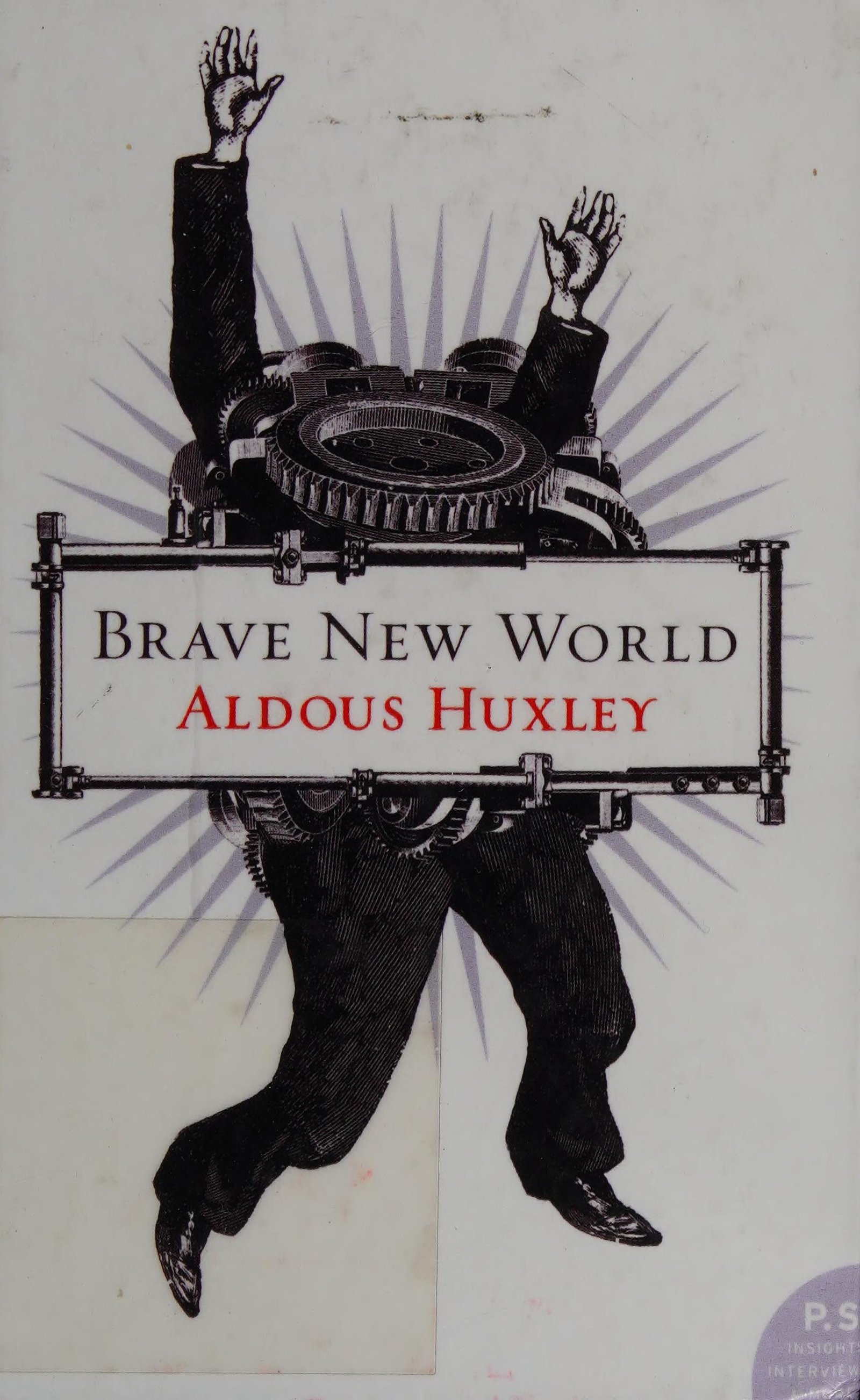
  4. Cover of Brave New World by Aldous Huxley

    Cover not available

    Brave New World

    by Aldous Huxley

    Now more than ever: Aldous Huxley's enduring masterwork must be read and understood by anyone concerned with preserving the human spirit
    "A masterpiece. ... One of the most prophetic dystopian works." —Wall Street Journal
    Aldous Huxley's profoundly important classic of world literature, Brave New World is a searching vision of an unequal, technologically-advanced future where humans are genetically bred, socially indoctrinated, and pharmaceutically anesthetized to passively uphold an authoritarian ruling order–all at the cost of our freedom, full humanity, and perhaps also our souls. “A genius [who] who spent his life decrying the onward march of the Machine” (The New Yorker), Huxley was a man of incomparable talents: equally an artist, a spiritual seeker, and one of history’s keenest observers of human nature and civilization. Brave New World, his masterpiece, has enthralled and terrified millions of readers, and retains its urgent relevance to this day as both a warning to be heeded as we head into tomorrow and as thought-provoking, satisfying work of literature. Written in the shadow of the rise of fascism during the 1930s, Brave New World likewise speaks to a 21st-century world dominated by mass-entertainment, technology, medicine and pharmaceuticals, the arts of persuasion, and the hidden influence of elites.
    "Aldous Huxley is the greatest 20th century writer in English." —Chicago Tribune

    Why it's similar

    Both books are dystopian critiques of social control and propaganda, showing how institutions manipulate people into compliance. They also share a sharp satirical edge and a concern with the loss of independent judgment.

    What's different

    Its tone is more clinical and world-building-heavy, with a strong emphasis on pleasure, conditioning, and social engineering instead of a compact fable. The story is less openly symbolic and more focused on futuristic systems than on a farm-like cast of archetypes.

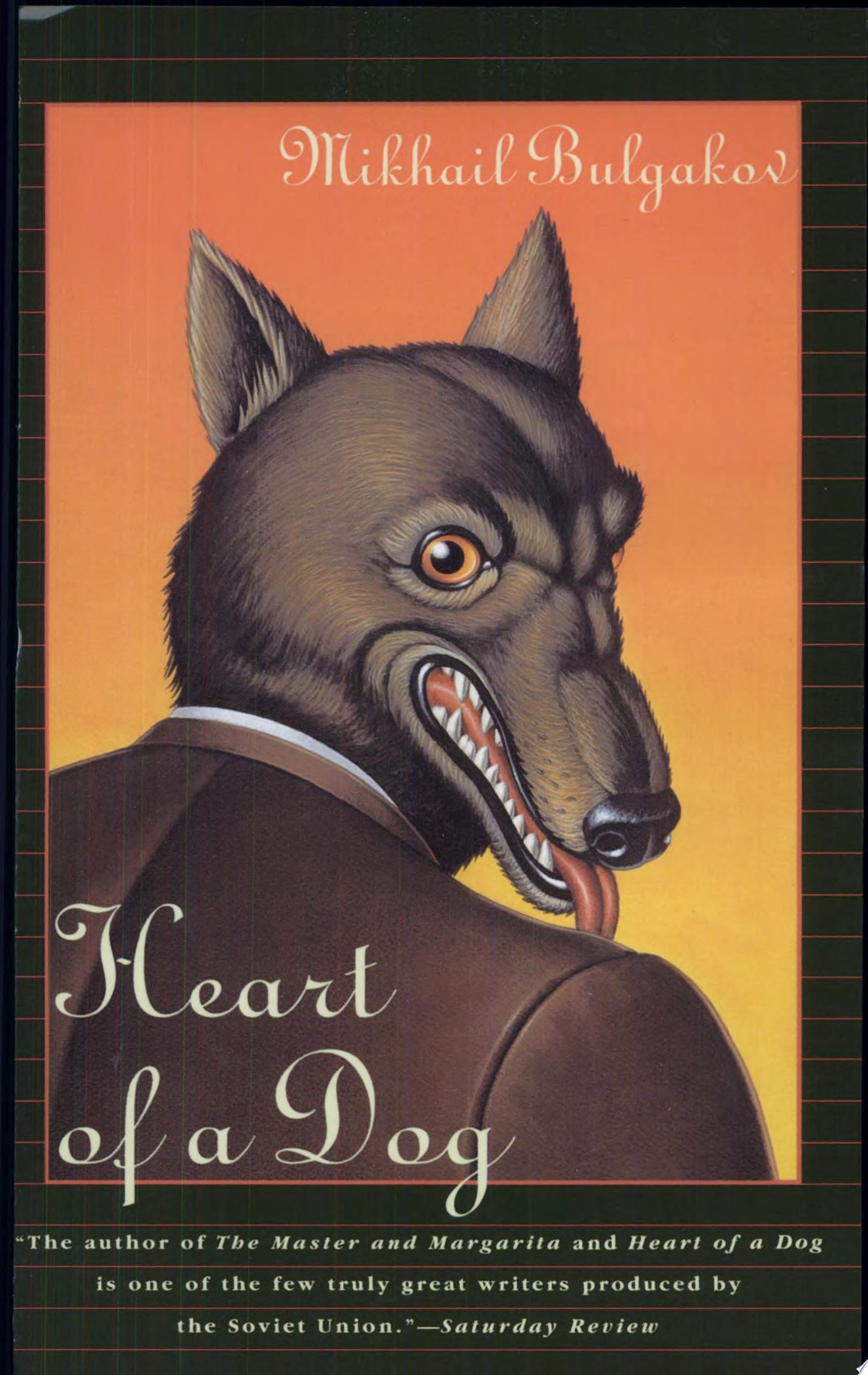
  5. Cover of Heart of a Dog by Mikhail Bulgakov

    Cover not available

    Heart of a Dog

    by Mikhail Bulgakov

    I first read Mikhail Bulgakov's The Master and Margarita on a balcony of the Hotel Metropole in Saigon on three summer evenings in 1971. The tropical air was heavy and full of the smells of cordite and motorcycle exhaust and rotting fish and wood-fire stoves, and the horizon flared ambiguously, perhaps from heat lightning, perhaps from bombs. Later each night, as was my custom, I would wander out into the steamy back alleys of the city, where no one ever seemed to sleep, and crouch in doorways with the people and listen to the stories of their culture and their ancestors and their ongoing lives. Bulgakov taught me to hear something in those stories that I had not yet clearly heard. One could call it, in terms that would soon thereafter gain wide currency, "magical realism". The deadpan mix of the fantastic and the realistic was at the heart of the Vietnamese mythos. It is at the heart of the present zeitgeist. And it was not invented by Gabriel Garcia Marquez, as wonderful as his One Hundred Years of Solitude is. Garcia Marquez's landmark work of magical realism was predated by nearly three decades by Bulgakov's brilliant masterpiece of a novel. That summer in Saigon a vodka-swilling, talking black cat, a coven of beautiful naked witches, Pontius Pilate, and a whole cast of benighted writers of Stalinist Moscow and Satan himself all took up permanent residence in my creative unconscious. Their presence, perhaps more than anything else from the realm of literature, has helped shape the work I am most proud of. I'm often asked for a list of favorite authors. Here is my advice. Read Bulgakov. Look around you at the new century. He will show you things you need to see.

    Why it's similar

    Both books use satire to critique Soviet society and expose the arrogance and hypocrisy of revolutionary projects. Each relies on exaggerated, symbolic figures to show how ideology distorts human behavior and institutions.

    What's different

    It is a comic-satirical novella about a scientific experiment gone wrong in Soviet Russia, rather than a political parable built around farm animals. The humor is broader and the story leans more toward absurd transformation than toward a straightforward fable structure.

Looking for something else?

Use our book recommendation tool to discover books similar to any of your favorites.

Find similar books with LibroMatch