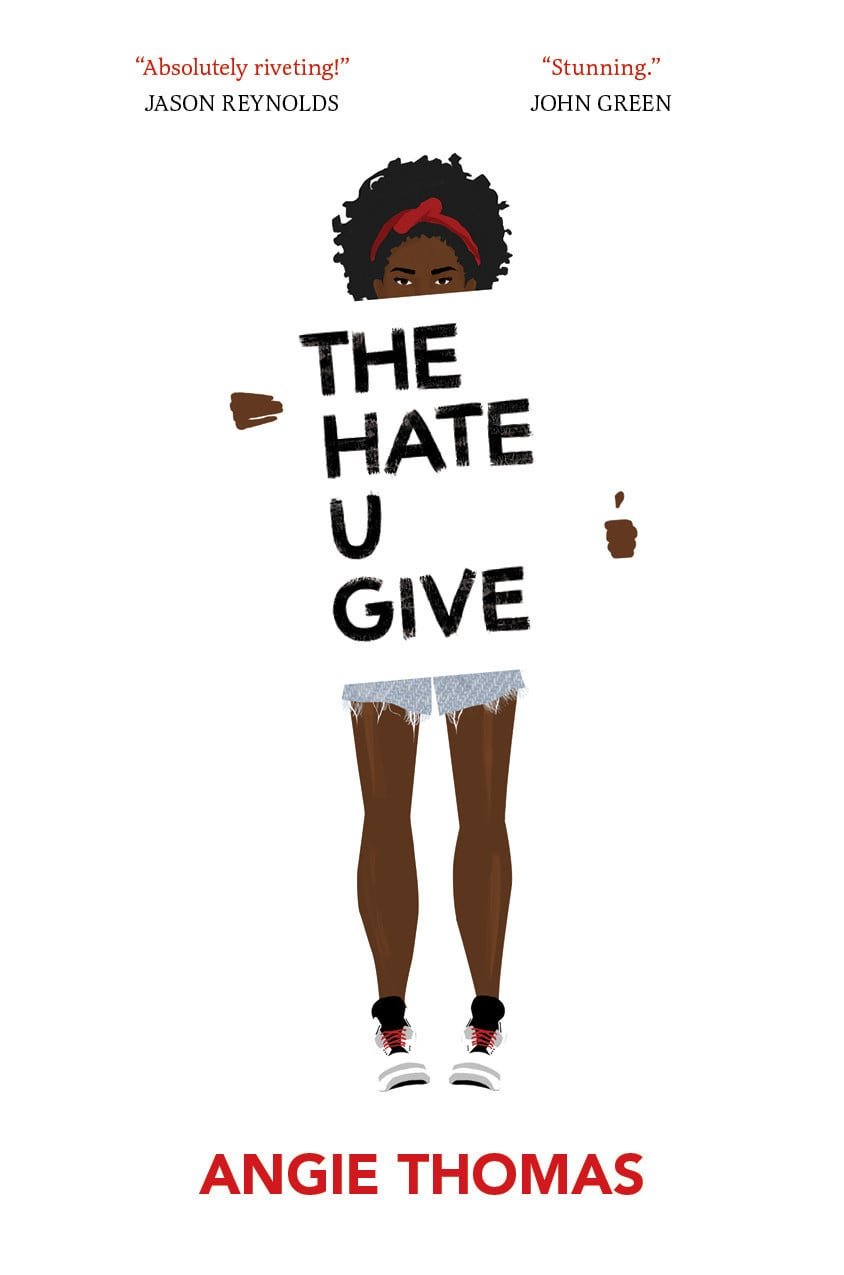
Cover of The Hate U Give by Angie Thomas

5 book recommendations

Books Like “The Hate U Give” by Angie Thomas

If you were moved by the powerful social justice themes, authentic voice, and raw emotional depth of The Hate U Give, you are not alone. Angie Thomas captured a vital cultural moment that continues to inspire readers everywhere. Dive into our curated recommendations below to discover your next unforgettable read.

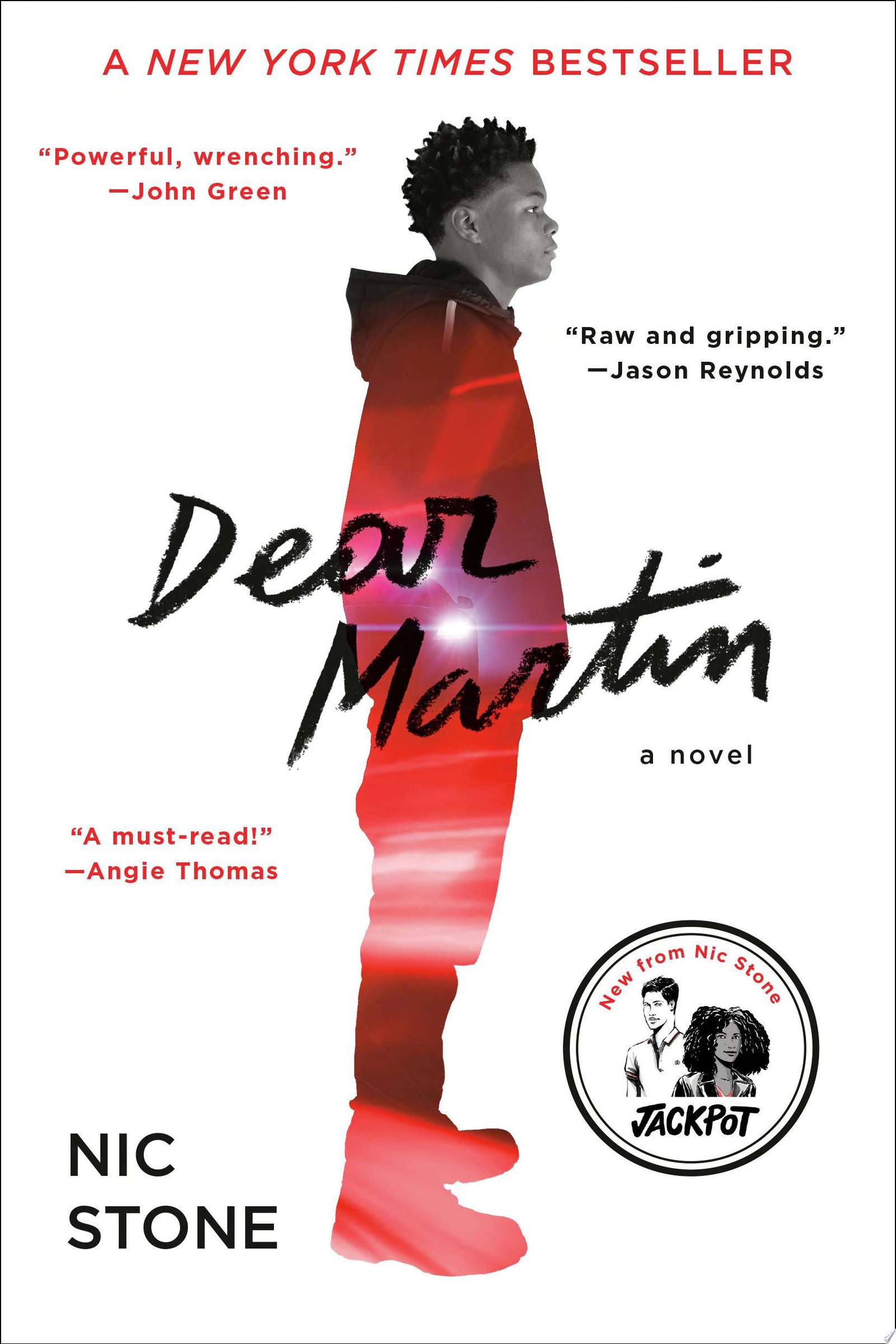
  1. Cover of Dear Martin by Nic Stone

    Cover not available

    Dear Martin

    by Nic Stone

    "Powerful, wrenching.” –JOHN GREEN, #1 New York Times bestselling author of Turtles All the Way Down

    "Raw and gripping." –JASON REYNOLDS, New York Times bestselling coauthor of All American Boys

    "A must-read!” –ANGIE THOMAS, #1 New York Times bestselling author of The Hate U Give

    Raw, captivating, and undeniably real, Nic Stone joins industry giants Jason Reynolds and Walter Dean Myers as she boldly tackles American race relations in this stunning #1 New York Times bestselling debut, a William C. Morris Award Finalist.

    Justyce McAllister is a good kid, an honor student, and always there to help a friend—but none of that matters to the police officer who just put him in handcuffs. Despite leaving his rough neighborhood behind, he can't escape the scorn of his former peers or the ridicule of his new classmates.

    Justyce looks to the teachings of Dr. Martin Luther King Jr. for answers. But do they hold up anymore? He starts a journal to Dr. King to find out.

    Then comes the day Justyce goes driving with his best friend, Manny, windows rolled down, music turned up—way up, sparking the fury of a white off-duty cop beside them. Words fly. Shots are fired. Justyce and Manny are caught in the crosshairs. In the media fallout, it's Justyce who is under attack.

    "Vivid and powerful." -Booklist, Starred Review

    "A visceral portrait of a young man reckoning with the ugly, persistent violence of social injustice." -Publishers Weekly

    Why it's similar

    Both contemporary YA novels confront systemic racism, police profiling, and the emotional toll of code-switching between an underprivileged neighborhood and an elite, predominantly white prep school.

    What's different

    Dear Martin utilizes an epistolary format featuring letters addressed to Dr. Martin Luther King Jr. and follows a male protagonist, focusing more intensely on philosophical debates regarding nonviolence.
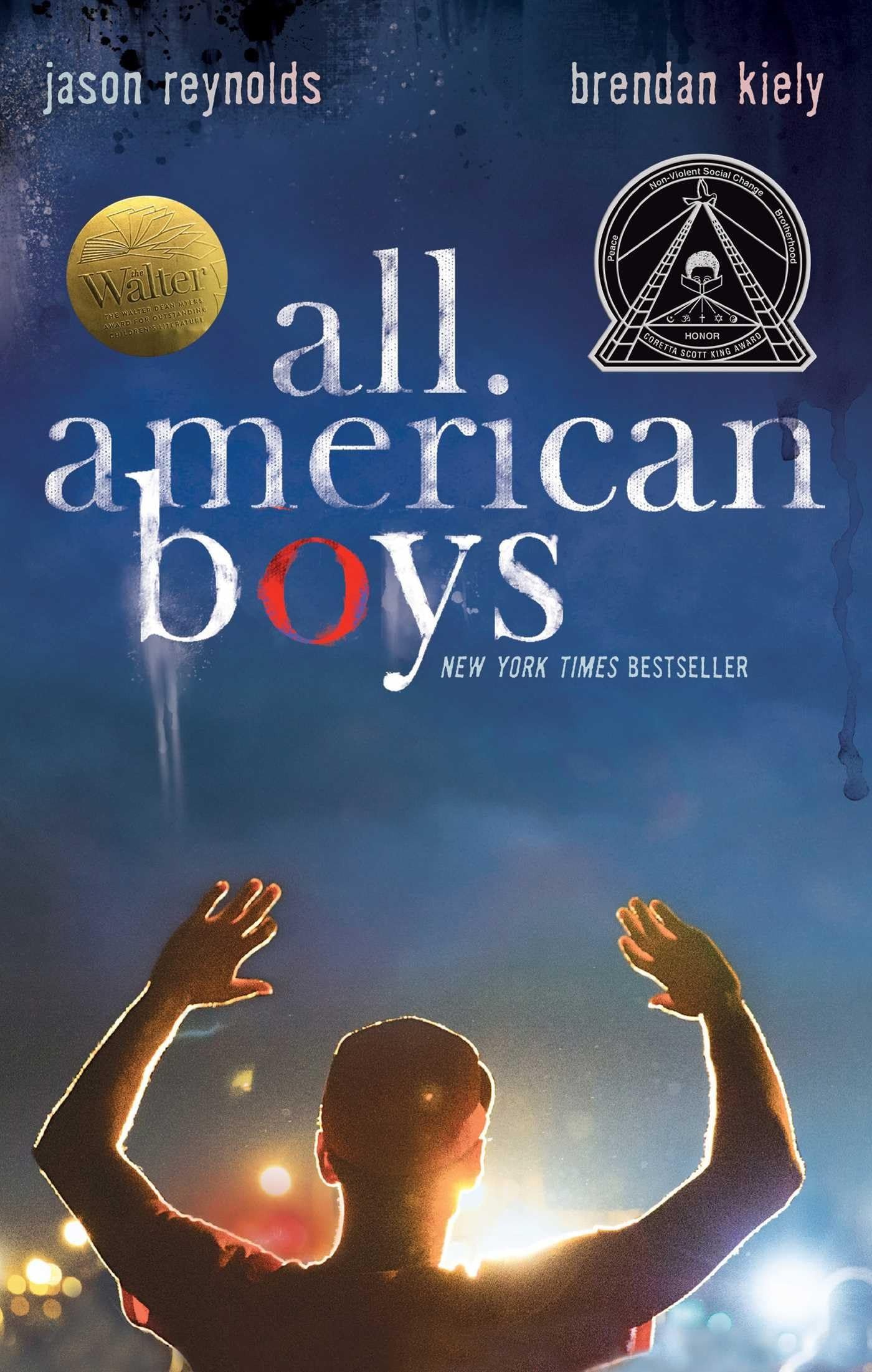
  2. Cover of All American Boys by Jason Reynolds and Brendan Kiely

    Cover not available

    All American Boys

    by Jason Reynolds and Brendan Kiely

    A 2016 Coretta Scott King Author Honor book, and recipient of the Walter Dean Myers Award for Outstanding Children’s Literature.

    In this New York Times bestselling novel, two teens—one black, one white—grapple with the repercussions of a single violent act that leaves their school, their community, and, ultimately, the country bitterly divided by racial tension.

    A bag of chips. That’s all sixteen-year-old Rashad is looking for at the corner bodega. What he finds instead is a fist-happy cop, Paul Galluzzo, who mistakes Rashad for a shoplifter, mistakes Rashad’s pleadings that he’s stolen nothing for belligerence, mistakes Rashad’s resistance to leave the bodega as resisting arrest, mistakes Rashad’s every flinch at every punch the cop throws as further resistance and refusal to STAY STILL as ordered. But how can you stay still when someone is pounding your face into the concrete pavement?

    There were witnesses: Quinn Collins—a varsity basketball player and Rashad’s classmate who has been raised by Paul since his own father died in Afghanistan—and a video camera. Soon the beating is all over the news and Paul is getting threatened with accusations of prejudice and racial brutality. Quinn refuses to believe that the man who has basically been his savior could possibly be guilty. But then Rashad is absent. And absent again. And again. And the basketball team—half of whom are Rashad’s best friends—start to take sides. As does the school. And the town. Simmering tensions threaten to explode as Rashad and Quinn are forced to face decisions and consequences they had never considered before.

    Written in tandem by two award-winning authors, this four-starred reviewed tour de force shares the alternating perspectives of Rashad and Quinn as the complications from that single violent moment, the type taken directly from today’s headlines, unfold and reverberate to highlight an unwelcome truth.

    Why it's similar

    Both books depict the devastating fallout of police brutality against an unarmed Black teenager, showing how community protests and school politics intersect with the aftermath of violence.

    What's different

    All American Boys is told through alternating dual perspectives—one Black victim and one white bystander—rather than maintaining a single witness narrative throughout the novel.

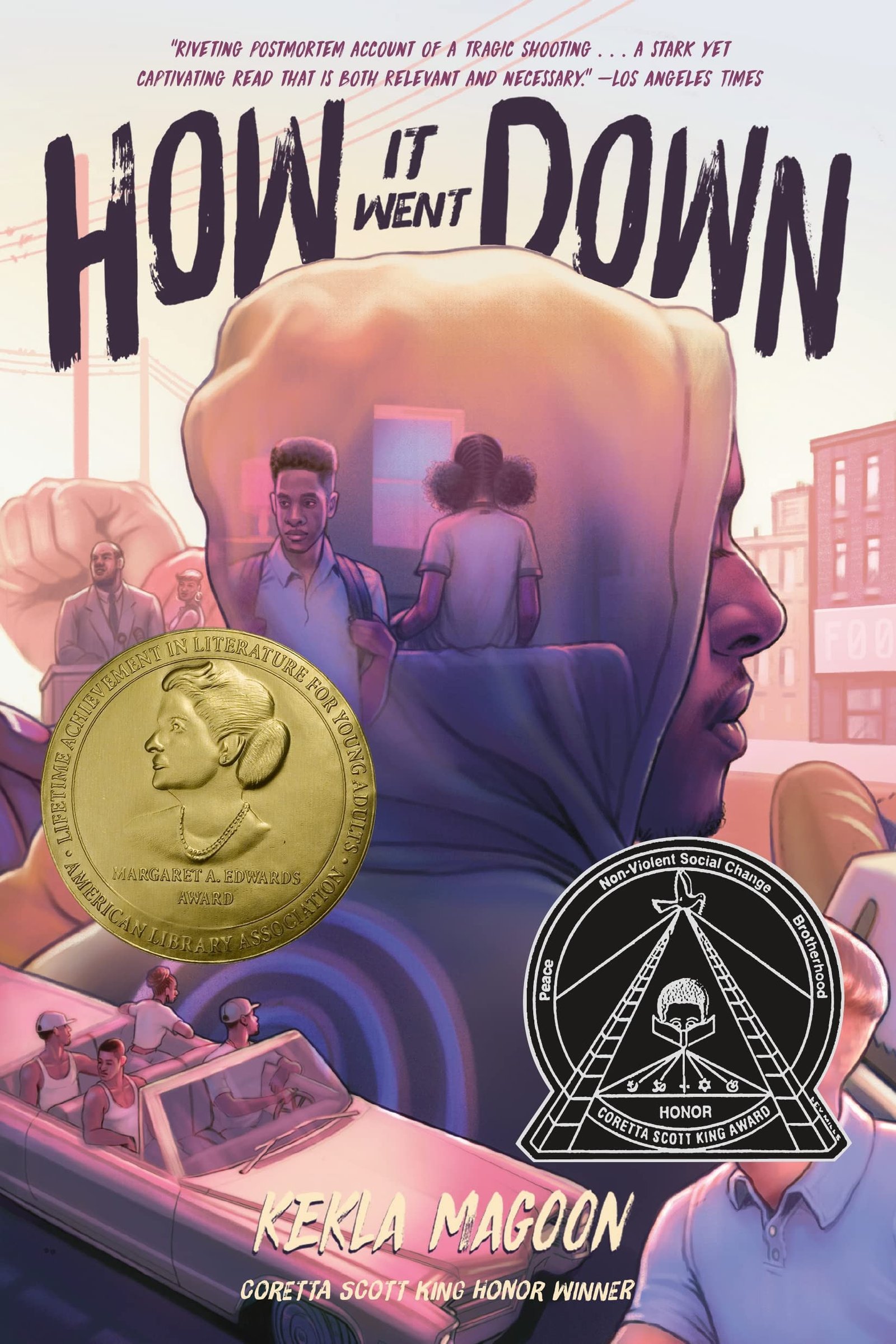
  3. Cover of How It Went Down by Kekla Magoon

    Cover not available

    How It Went Down

    by Kekla Magoon

    A Coretta Scott King Author Honor Book

    When sixteen-year-old Tariq Johnson dies from two gunshot wounds, his community is thrown into an uproar. Tariq was black. The shooter, Jack Franklin, is white.

    In the aftermath of Tariq's death, everyone has something to say, but no two accounts of the events line up. Day by day, new twists further obscure the truth.

    Tariq's friends, family, and community struggle to make sense of the tragedy, and to cope with the hole left behind when a life is cut short. In their own words, they grapple for a way to say with certainty: This is how it went down.

    How It Went Down is a timely story by acclaimed author Kekla Magoon who won the Coretta Scott King/John Steptoe Award for The Rock and the River, and whose book X :A Novel (written with Ilyasah Shabazz) was longlisted for the National Book Award.

    This title has Common Core connections.

    Why it's similar

    Both novels examine the fatal shooting of a Black teenager, illustrating how media spin, racial prejudice, and conflicting witness statements affect the search for justice.

    What's different

    Rather than following one central protagonist's growth and activism, How It Went Down uses an ensemble cast of brief, fragmented viewpoints to highlight subjective memory and community discord.

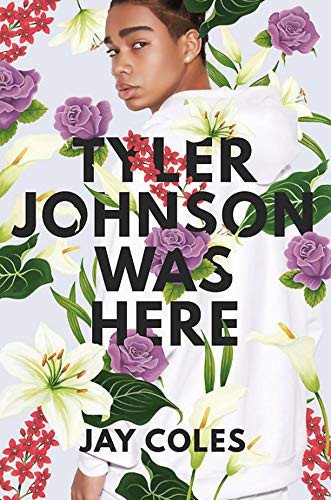
  4. Cover of Tyler Johnson Was Here by Jay Coles

    Cover not available

    Tyler Johnson Was Here

    by Jay Coles

    A stunning portrait of young black lives in modern America, for readers of The Hate U Give.
    Twins Marvin and Tyler couldn't be more different. Where Marvin is reserved, Tyler is charismatic. Where Marvin is consumed by grief for his absent father, Tyler is carefree. And where Marvin is careful, Tyler is daring. But despite their differences, and despite the poverty and trauma that threatens to pull them apart, the brothers are close. Then, one fateful night, Tyler decides to go to a party, and Marvin tags along, hoping to keep an eye on his brother. But what starts out as harmless fun soon descends into a night of chaos that ends in a police raid. And the next day, Tyler is missing. As his mother falls apart and his brother becomes known only as a hashtag, Marvin will learn what justice and freedom really mean in an unfair world.

    Why it's similar

    Both stories focus on the trauma inflicted by police violence against young Black men, highlighting how viral video evidence exposes systemic injustice and sparks grassroots activism.

    What's different

    This novel places central emphasis on the bond of twin brothers and the visceral, prolonged grief of searching for a missing sibling before discovering his fate.

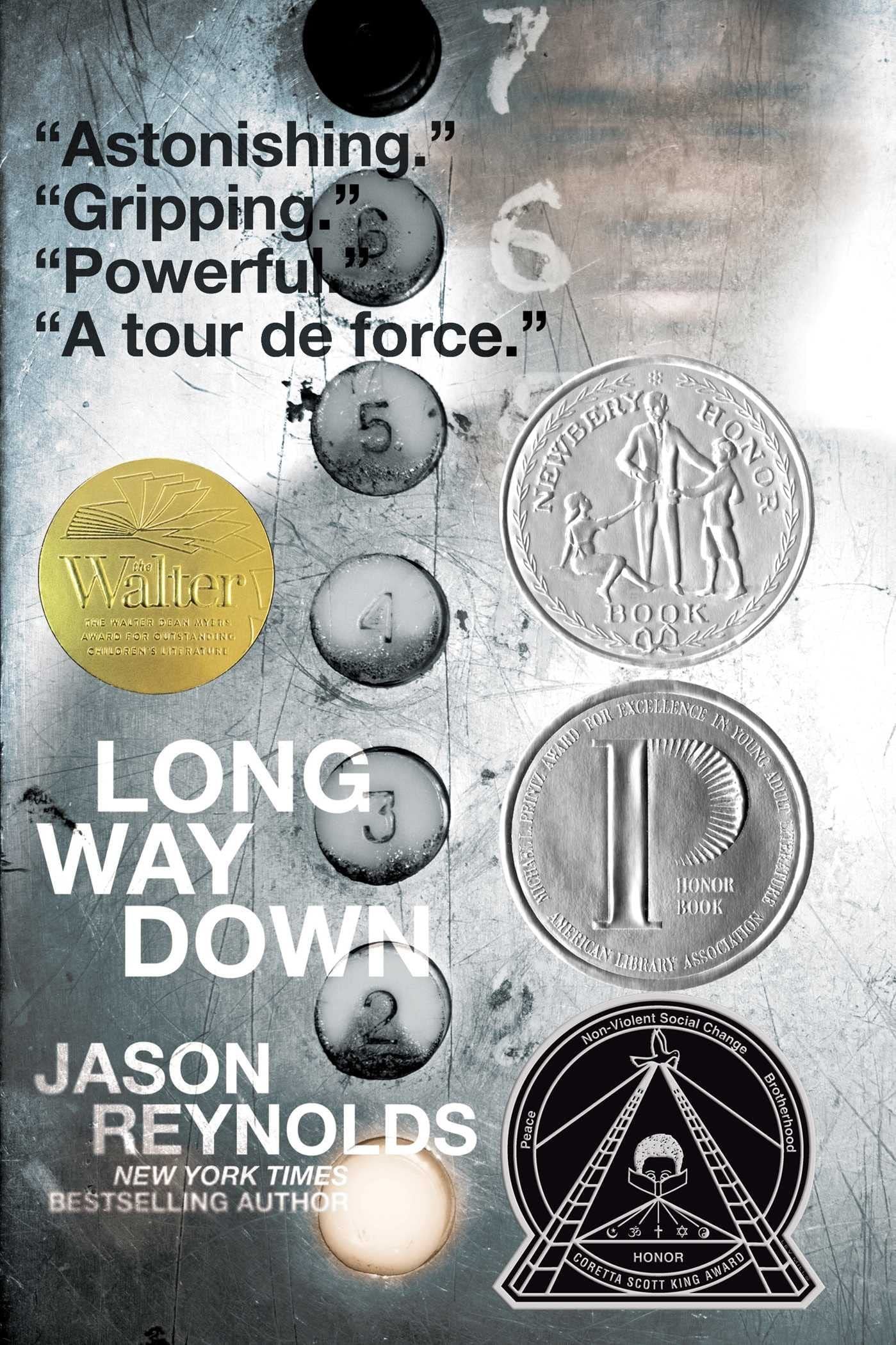
  5. Cover of Long Way Down by Jason Reynolds

    Cover not available

    Long Way Down

    by Jason Reynolds

    “An intense snapshot of the chain reaction caused by pulling a trigger.” —Booklist (starred review)
    “Astonishing.” —Kirkus Reviews (starred review)
    “A tour de force.” —Publishers Weekly (starred review)

    A Newbery Honor Book
    A Coretta Scott King Honor Book
    A Printz Honor Book
    A Time Best YA Book of All Time (2021)
    A Los Angeles Times Book Prize Winner for Young Adult Literature
    Longlisted for the National Book Award for Young People’s Literature
    Winner of the Walter Dean Myers Award
    An Edgar Award Winner for Best Young Adult Fiction
    Parents’ Choice Gold Award Winner
    An Entertainment Weekly Best YA Book of 2017
    A Vulture Best YA Book of 2017
    A Buzzfeed Best YA Book of 2017

    An ode to Put the Damn Guns Down, this is New York Times bestselling author Jason Reynolds’s electrifying novel that takes place in sixty potent seconds—the time it takes a kid to decide whether or not he’s going to murder the guy who killed his brother.

    A cannon. A strap.
    A piece. A biscuit.
    A burner. A heater.
    A chopper. A gat.
    A hammer
    A tool
    for RULE

    Or, you can call it a gun. That’s what fifteen-year-old Will has shoved in the back waistband of his jeans. See, his brother Shawn was just murdered. And Will knows the rules. No crying. No snitching. Revenge. That’s where Will’s now heading, with that gun shoved in the back waistband of his jeans, the gun that was his brother’s gun. He gets on the elevator, seventh floor, stoked. He knows who he’s after. Or does he?

    As the elevator stops on the sixth floor, on comes Buck. Buck, Will finds out, is who gave Shawn the gun before Will took the gun. Buck tells Will to check that the gun is even loaded. And that’s when Will sees that one bullet is missing. And the only one who could have fired Shawn’s gun was Shawn. Huh. Will didn’t know that Shawn had ever actually USED his gun. Bigger huh. BUCK IS DEAD. But Buck’s in the elevator?

    Just as Will’s trying to think this through, the door to the next floor opens. A teenage girl gets on, waves away the smoke from Dead Buck’s cigarette. Will doesn’t know her, but she knew him. Knew. When they were eight. And stray bullets had cut through the playground, and Will had tried to cover her, but she was hit anyway, and so what she wants to know, on that fifth floor elevator stop, is, what if Will, Will with the gun shoved in the back waistband of his jeans, MISSES.

    And so it goes, the whole long way down, as the elevator stops on each floor, and at each stop someone connected to his brother gets on to give Will a piece to a bigger story than the one he thinks he knows. A story that might never know an END…if Will gets off that elevator.

    Told in short, fierce staccato narrative verse, Long Way Down is a fast and furious, dazzlingly brilliant look at teenage gun violence, as could only be told by Jason Reynolds.

    Why it's similar

    Like The Hate U Give, it centers on a teen processing the shooting death of a loved one and wrestling with cycles of violence in his community, using an intimate voice and strong emotional immediacy.

    What's different

    Told in free verse over the course of a single elevator ride, it’s more stylistically experimental and distilled, with the narrative compressed into a brief, almost allegorical, moment of decision.

Looking for something else?

Use our book recommendation tool to discover books similar to any of your favorites.

Find similar books with LibroMatch