
Cover of Angels & Demons by Dan Brown

6 book recommendations

Books Like “Angels & Demons” by Dan Brown

If you could not put down Angels & Demons, you are likely craving another high-stakes thriller packed with ancient conspiracies, secret societies, and relentless pacing. Dan Brown captivated readers with his breathless blend of religious history and ticking-clock mystery. Explore our handpicked recommendations below to discover your next unforgettable intellectual adventure.

  1. Cover of The Last Templar by Raymond Khoury

    Cover not available

    The Last Templar

    by Raymond Khoury

    "It has served us well, this myth of Christ."
    Pope Leo X, 16th Century

    In a hail of fire and flashing sword, as the burning city of Acre falls from the hands of the West in 1291, The Last Templar opens with a young Templar knight, his mentor, and a handful of others escaping to the sea carrying a mysterious chest entrusted to them by the Order's dying Grand Master. The ship vanishes without a trace.

    In present day Manhattan, four masked horsemen dressed as Templar Knights emerge from Central Park and ride up the Fifth Avenue steps of the Metropolitan Museum of Art during the blacktie opening of a Treasures of the Vatican exhibit. Storming through the crowds, the horsemen brutally attack anyone standing between them and their prize. Attending the gala, archaeologist Tess Chaykin watches in silent terror as the leader of the horsemen hones in on one piece in particular, a strange geared device. He utters a few cryptic Latin words as he takes hold of it with reverence before leading the horsemen out and disappearing into the night.

    In the aftermath, an FBI investigation is led by anti-terrorist specialist Sean Reilly. Soon, he and Tess are drawn into the dark, hidden history of the crusading Knights, plunging them into a deadly game of cat and mouse with ruthless killers as they race across three continents to recover the lost secret of the Templars.

    Why it's similar

    Both novels feature a high-stakes conspiracy targeting Catholic dogma, ancient religious orders, and an FBI agent working alongside an academic specialist to decipher historical clues.

    What's different

    It utilizes dual timelines that regularly jump back to the Crusades and the fall of the Knights Templar, contrasting Brown's strictly contemporary, single-night countdown.
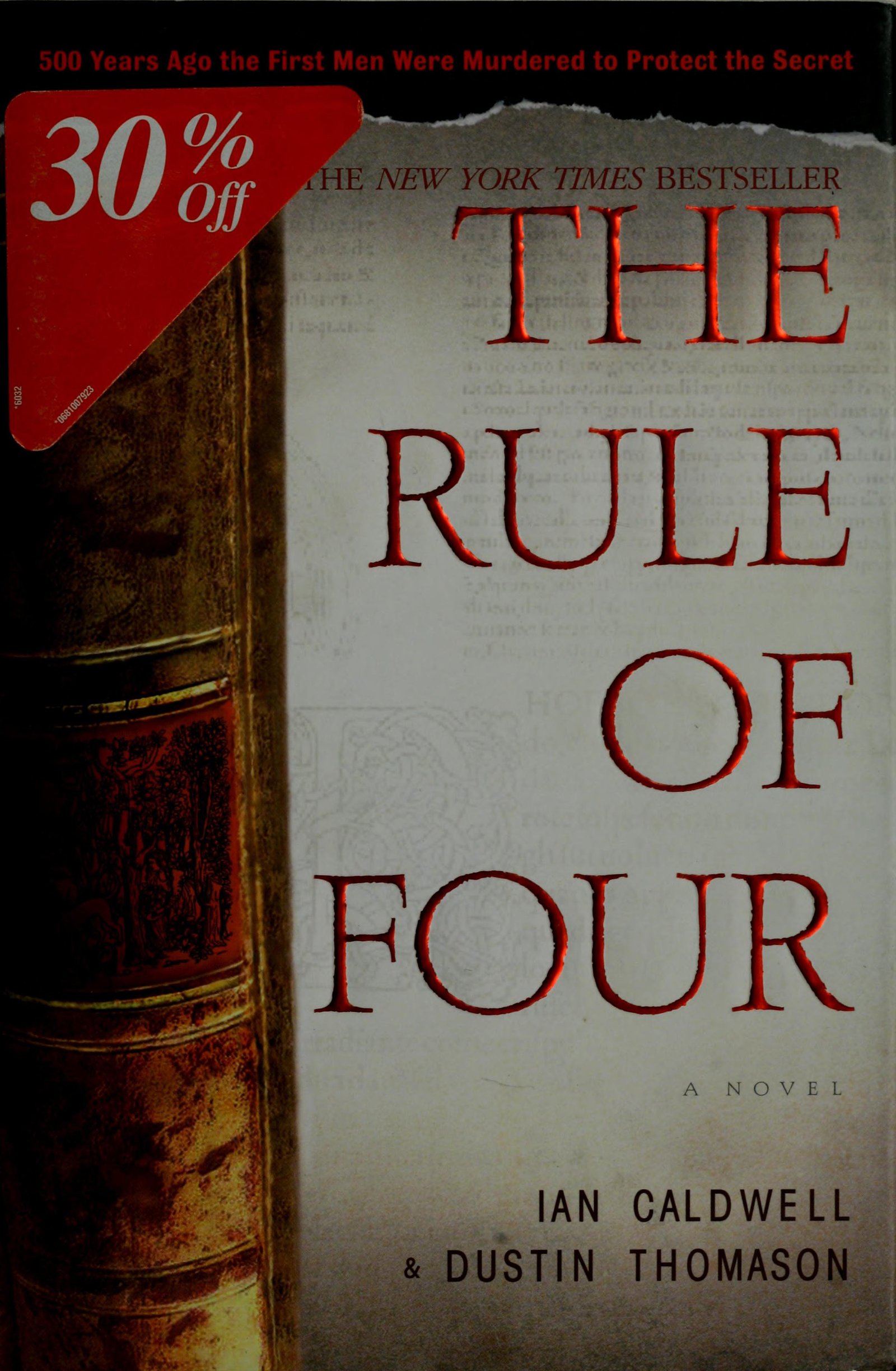

  2. Cover of The Rule of Four by Ian Caldwell and Dustin Thomason

    Cover not available

    The Rule of Four

    by Ian Caldwell and Dustin Thomason

    An ivy league murder, a mysterious coded manuscript, and the secrets of a Renaissance prince collide memorably in The Rule of Four—a brilliant work of fiction that weaves together suspense and scholarship, high art and unimaginable treachery.

    It's Easter at Princeton. Seniors are scrambling to finish their theses. And two students, Tom Sullivan and Paul Harris, are a hair's breadth from solving the mysteries of the Hypnerotomachia Poliphili—a renowned text attributed to an Italian nobleman, a work that has baffled scholars since its publication in 1499. For Tom, their research has been a link to his family's past—and an obstacle to the woman he loves. For Paul, it has become an obsession, the very reason for living. But as their deadline looms, research has stalled—until a long-lost diary surfaces with a vital clue. And when a fellow researcher is murdered just hours later, Tom and Paul realize that they are not the first to glimpse the Hypnerotomachia 's secrets.

    Suddenly the stakes are raised, and as the two friends sift through the codes and riddles at the heart of the text, they are beginnning to see the manuscript in a new light—not simply as a story of faith, eroticism and pedantry, but as a bizarre, coded mathematical maze. And as they come closer and closer to deciphering the final puzzle of a book that has shattered careers, friendships and families, they know that their own lives are in mortal danger. Because at least one person has been killed for knowing too much. And they know even more.

    From the streets of fifteenth-century Rome to the rarified realm of the Ivy League, from a shocking 500 year-old murder scene to the drama of a young man's coming of age, The Rule of Four takes us on an entertaining, illuminating tour of history—as it builds to a pinnacle of nearly unbearable suspense.

    Why it's similar

    Both stories focus on scholarly protagonists decoding obscure Renaissance texts, hidden architecture, and cryptic symbols to solve a fatal academic puzzle.

    What's different

    The pacing is meditative and campus-focused, trading breathless chase sequences and bombastic set pieces for psychological depth and meticulous literary analysis.

  3. Cover of The Eight by Katherine Neville

    Cover not available

    The Eight

    by Katherine Neville

    Computer expert Cat Velis is heading for a job to Algeria. Before she goes, a mysterious fortune teller warns her of danger, and an antique dealer asks her to search for pieces to a valuable chess set that has been missing for years...In the South of France in 1790 two convent girls hide valuable pieces of a chess set all over the world, because the game that can be played with them is too powerful....

    Why it's similar

    Both books revolve around the dangerous search for a hidden, scientifically potent religious relic protected by codes, esoteric riddles, and secret societies.

    What's different

    The narrative unfolds over centuries across alternating historical timelines, placing a heavy focus on chess theory, mathematics, and mysticism over action-thriller set pieces.

  4. Cover of Sanctus by Simon Toyne

    Cover not available

    Sanctus

    by Simon Toyne

    In the oldest inhabited place on earth, atop a mountain known as the Citadel, a Vatican-like city-state towers above the city of Ruin in modern-day Turkey. Now, thanks to media coverage of a climber's assent, the eyes of the whole world are on a group that has prized its secrets above all things. For the Sancti—the monks living inside the Citadel—this could mean the end of everything they have built and protected for millennia . . . and they will stop at nothing to keep what is theirs.

    For American reporter Liv Adamsen, driven by the memory of a tragic loss, an earth-shaking discovery awaits that will change everything . . .

    Why it's similar

    It shares the atmospheric Vatican-adjacent setting, secretive religious brotherhoods guarding a world-altering revelation, and a rapid, suspenseful pursuit narrative.

    What's different

    The tone is significantly darker and features speculative, near-supernatural mystery elements rather than Dan Brown's hard science and factual historical puzzles.

  5. Cover of The Templar Legacy by Steve Berry

    Cover not available

    The Templar Legacy

    by Steve Berry

    The first explosive thriller in the Cotton Malone series from a New York Times megaselling author.

    The ancient order of the Knights Templar possessed untold wealth and absolute power, until the Inquisition destroyed them and their riches were lost forever.

    But some people don't believe in 'forever'.

    Ex-agent Cotton Malone used to work for Stephanie Nelle in the US Justice Department. Now Nelle wants his help to crack a series of puzzles that have confounded experts for centuries - and could lead to the legendary lost treasure of the Knights Templar.

    But someone else is on the trail - someone prepared to commit the ultimate crime to win the ultimate prize. Malone and Nelle find themselves in a heart-stopping race through the villages, castles and cloisters of Europe in pursuit of a secret that, in the wrong hands, could bring the world to its knees.

    Why it's similar

    Both are fast-paced conspiracy thrillers mixing secret religious orders, historical mysteries, and European settings, with protagonists racing to decode clues tied to Christianity and hidden power structures.

    What's different

    Berry’s pacing is slightly more methodical, with greater emphasis on historical exposition and series character development over the single intense crisis structure of Angels & Demons.

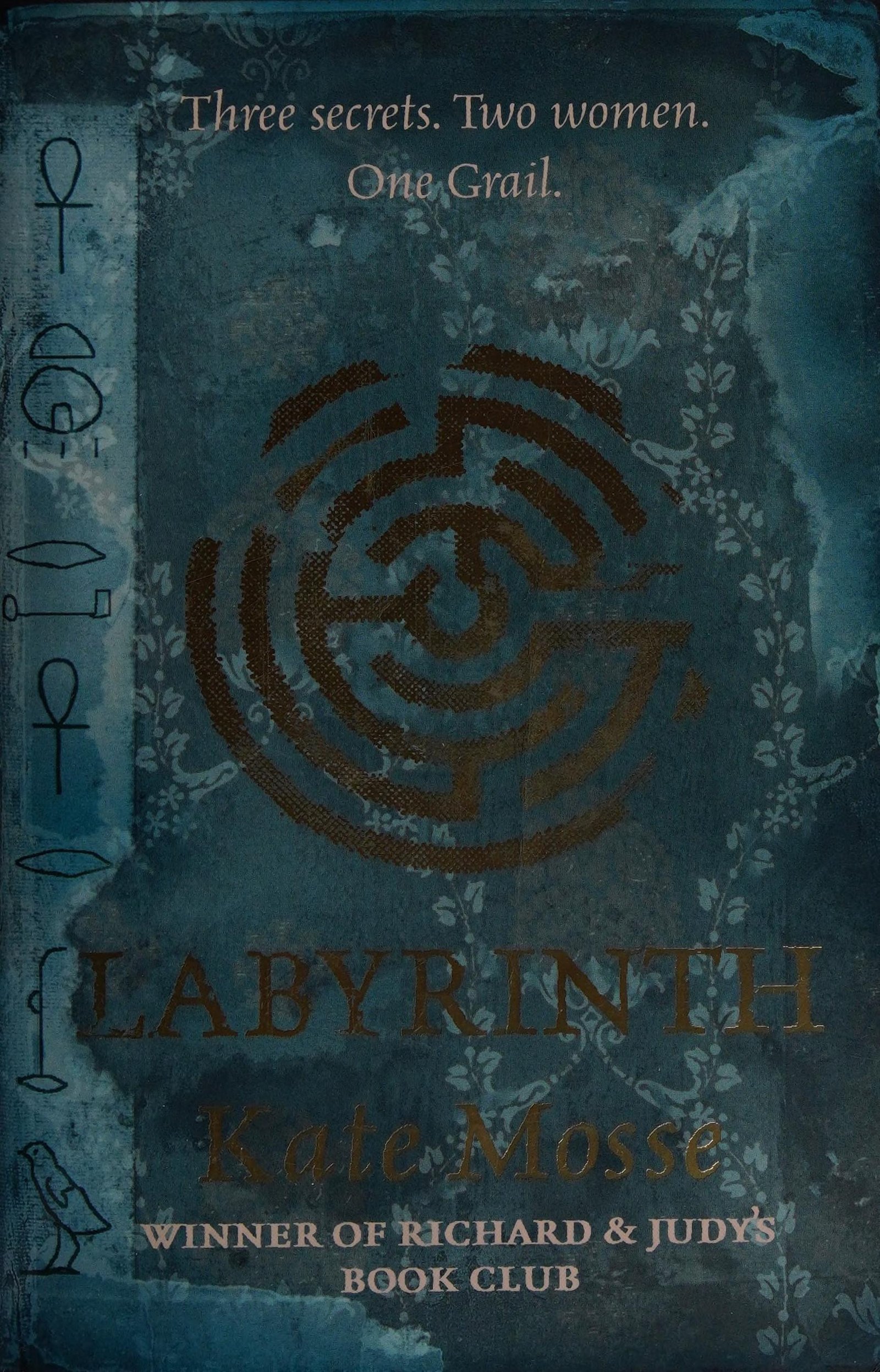
  6. Cover of Labyrinth by Kate Mosse

    Cover not available

    Labyrinth

    by Kate Mosse

    When Dr Alice Tanner discovers two skeletons during an archaeological dig in southern France, she unearths a link with a horrific and brutal past. But it's not just the sight of the shattered bones that makes her uneasy; there's an overwhelming sense of evil in the tomb that Alice finds hard to shake off, even in the bright French sunshine. Puzzled by the words carved inside the chamber, Alice has an uneasy feeling that she has disturbed something which was meant to remain hidden... Eight hundred years ago, on the night before a brutal civil war ripped apart Languedoc, a book was entrusted to Alais, a young herbalist and healer. Although she cannot understand the symbols and diagrams the book contains, Alais knows her destiny lies in protecting their secret, at all costs. Skilfully blending the lives of two women divided by centuries but united by a common destiny, LABYRINTH is a powerful story steeped in the atmosphere and history of southern France.

    Why it's similar

    Both stories feature modern protagonists uncovering ancient religious mysteries through cryptic clues, with European settings, Catholic history, and a blend of archaeological discovery and spiritual stakes driving the narrative.

    What's different

    Labyrinth uses a dual timeline and a more atmospheric, historical-fantasy tone, emphasizing personal destinies and the weight of history rather than the clockwork, single-day thriller structure of Angels & Demons.

Looking for something else?

Use our book recommendation tool to discover books similar to any of your favorites.

Find similar books with LibroMatch