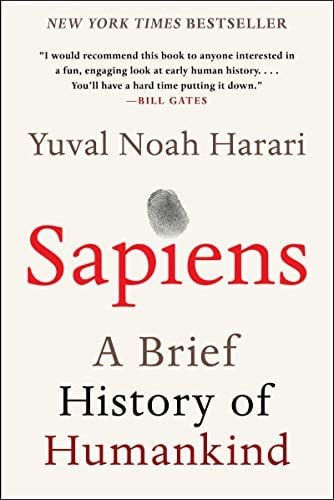

Cover of Sapiens: A Brief History of Humankind by Yuval Noah Harari

5 book recommendations

Books Like “Sapiens: A Brief History of Humankind” by Yuval Noah Harari

Yuval Noah Harari captivated millions by blending evolutionary biology, anthropology, and history into a sweeping narrative of human civilization. If you loved Sapiens for its mind-expanding perspective on how our species conquered the world, your intellectual journey does not end here. Explore our handpicked recommendations to discover your next fascinating read.

  1. Cover of Guns, Germs, and Steel: The Fates of Human Societies by Jared Diamond

    Cover not available

    Guns, Germs, and Steel: The Fates of Human Societies

    by Jared Diamond

    Why did Eurasians conquer, displace, or decimate Native Americans, Australians and Africans, instead of the reverse? In this groundbreaking book, evolutionary biologist Jared Diamond stunningly dismantles racially based theories of human history by revealing the environmental factors actually responsible for shaping the modern world. Societies that had a head start in food production advanced beyond the hunter-gatherer stage, and then developed writing, technology and government, and organized religion - as well as nasty germs and potent weapons of war. "The scope and explanatory power of this book are astounding." (The New Yorker) From the Publisher 11 1.5-hour cassettes

    Why it's similar

    Both books adopt a sweeping, macro-historical approach to examine why and how human societies evolved and structured themselves across thousands of years.

    What's different

    Diamond leans heavily into environmental and geographic determinism to explain global inequalities, whereas Harari emphasizes cognitive revolutions and the power of shared fictions like religion, law, and money.
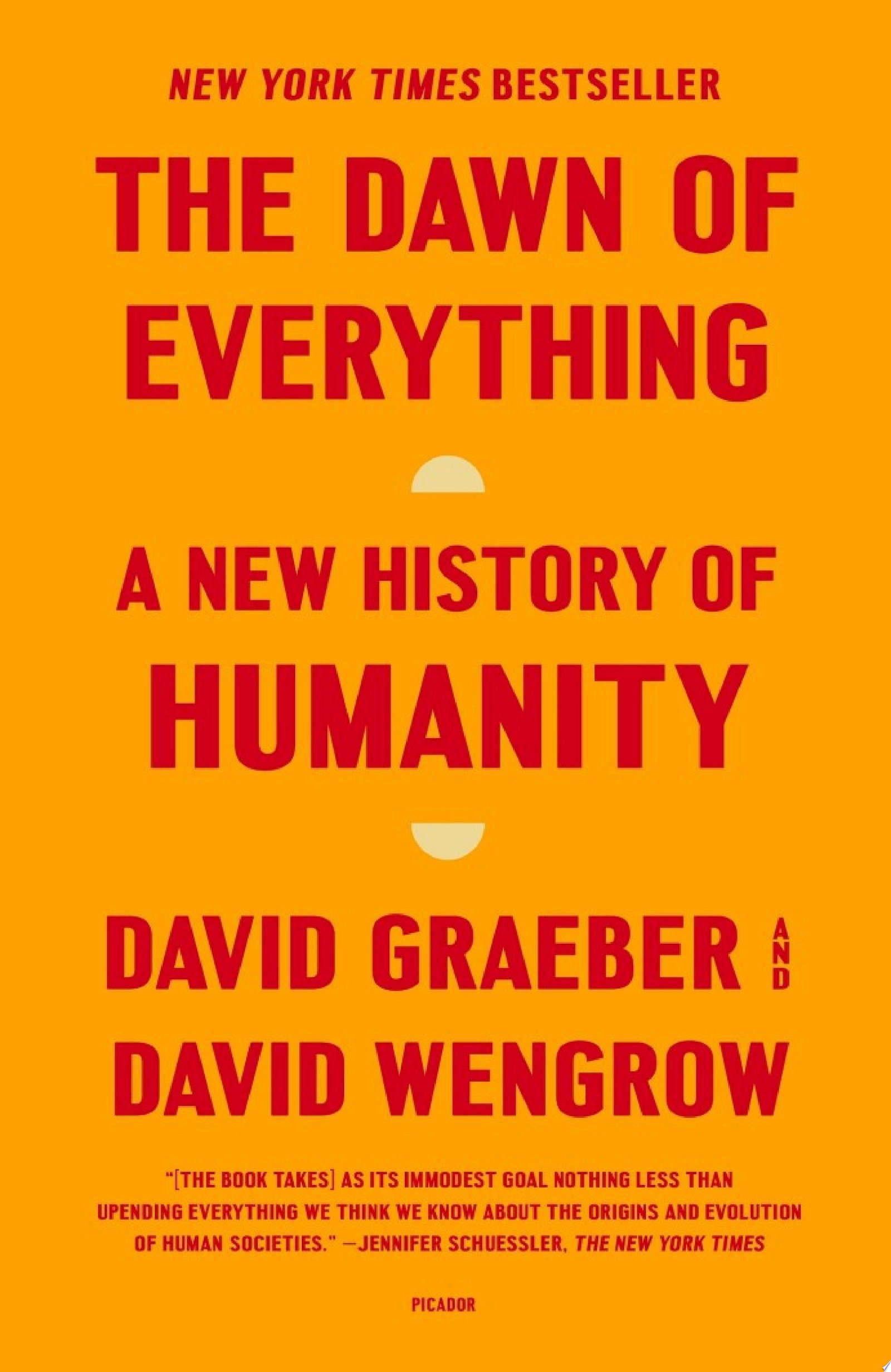
  2. Cover of The Dawn of Everything: A New History of Humanity by David Graeber and David Wengrow

    Cover not available

    The Dawn of Everything: A New History of Humanity

    by David Graeber and David Wengrow

    INSTANT NEW YORK TIMES BESTSELLER

    A dramatically new understanding of human history, challenging our most fundamental assumptions about social evolution—from the development of agriculture and cities to the origins of the state, democracy, and inequality—and revealing new possibilities for human emancipation.

    For generations, our remote ancestors have been cast as primitive and childlike—either free and equal innocents, or thuggish and warlike. Civilization, we are told, could be achieved only by sacrificing those original freedoms or, alternatively, by taming our baser instincts. David Graeber and David Wengrow show how such theories first emerged in the eighteenth century as a conservative reaction to powerful critiques of European society posed by Indigenous observers and intellectuals. Revisiting this encounter has startling implications for how we make sense of human history today, including the origins of farming, property, cities, democracy, slavery, and civilization itself.

    Drawing on pathbreaking research in archaeology and anthropology, the authors show how history becomes a far more interesting place once we learn to throw off our conceptual shackles and perceive what’s really there. If humans did not spend 95 percent of their evolutionary past in tiny bands of hunter-gatherers, what were they doing all that time? If agriculture, and cities, did not mean a plunge into hierarchy and domination, then what kinds of social and economic organization did they lead to? The answers are often unexpected, and suggest that the course of human history may be less set in stone, and more full of playful, hopeful possibilities, than we tend to assume.

    The Dawn of Everything fundamentally transforms our understanding of the human past and offers a path toward imagining new forms of freedom, new ways of organizing society. This is a monumental book of formidable intellectual range, animated by curiosity, moral vision, and a faith in the power of direct action.

    Includes Black-and-White Illustrations

    Why it's similar

    Both works reassess the entire scope of human prehistory, challenging conventional assumptions about early hunter-gatherers, the Agricultural Revolution, and the emergence of state structures.

    What's different

    Graeber and Wengrow reject standard teleological stages of history, arguing that ancient humans consciously experimented with diverse political arrangements rather than being trapped by evolutionary transitions.

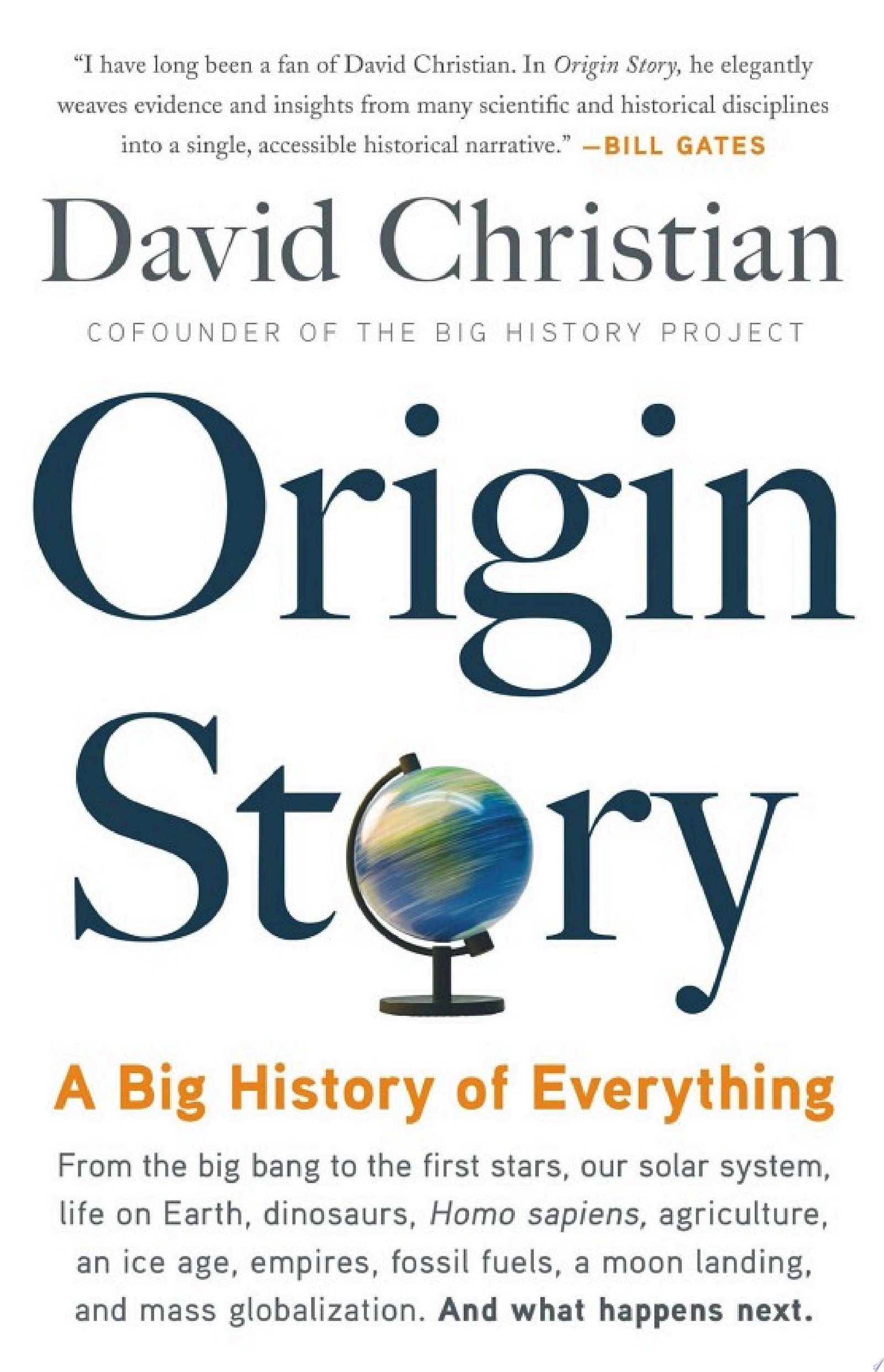
  3. Cover of Origin Story: A Big History of Everything by David Christian

    Cover not available

    Origin Story: A Big History of Everything

    by David Christian

    This New York Times bestseller "elegantly weaves evidence and insights . . . into a single, accessible historical narrative" (Bill Gates) and presents a captivating history of the universe -- from the Big Bang to dinosaurs to mass globalization and beyond. Most historians study the smallest slivers of time, emphasizing specific dates, individuals, and documents. But what would it look like to study the whole of history, from the big bang through the present day -- and even into the remote future? How would looking at the full span of time change the way we perceive the universe, the earth, and our very existence? These were the questions David Christian set out to answer when he created the field of "Big History," the most exciting new approach to understanding where we have been, where we are, and where we are going. In Origin Story, Christian takes readers on a wild ride through the entire 13.8 billion years we've come to know as "history." By focusing on defining events (thresholds), major trends, and profound questions about our origins, Christian exposes the hidden threads that tie everything together -- from the creation of the planet to the advent of agriculture, nuclear war, and beyond. With stunning insights into the origin of the universe, the beginning of life, the emergence of humans, and what the future might bring, Origin Story boldly reframes our place in the cosmos.

    Why it's similar

    Both texts synthesize multidisciplinary science and history to provide an accessible, grand narrative tracing the trajectory of humanity within the broader natural world.

    What's different

    Christian expands the scope beyond humanity to the universe itself, beginning at the Big Bang and incorporating cosmology and geology, whereas Harari focuses squarely on the cultural and cognitive journey of Homo sapiens.

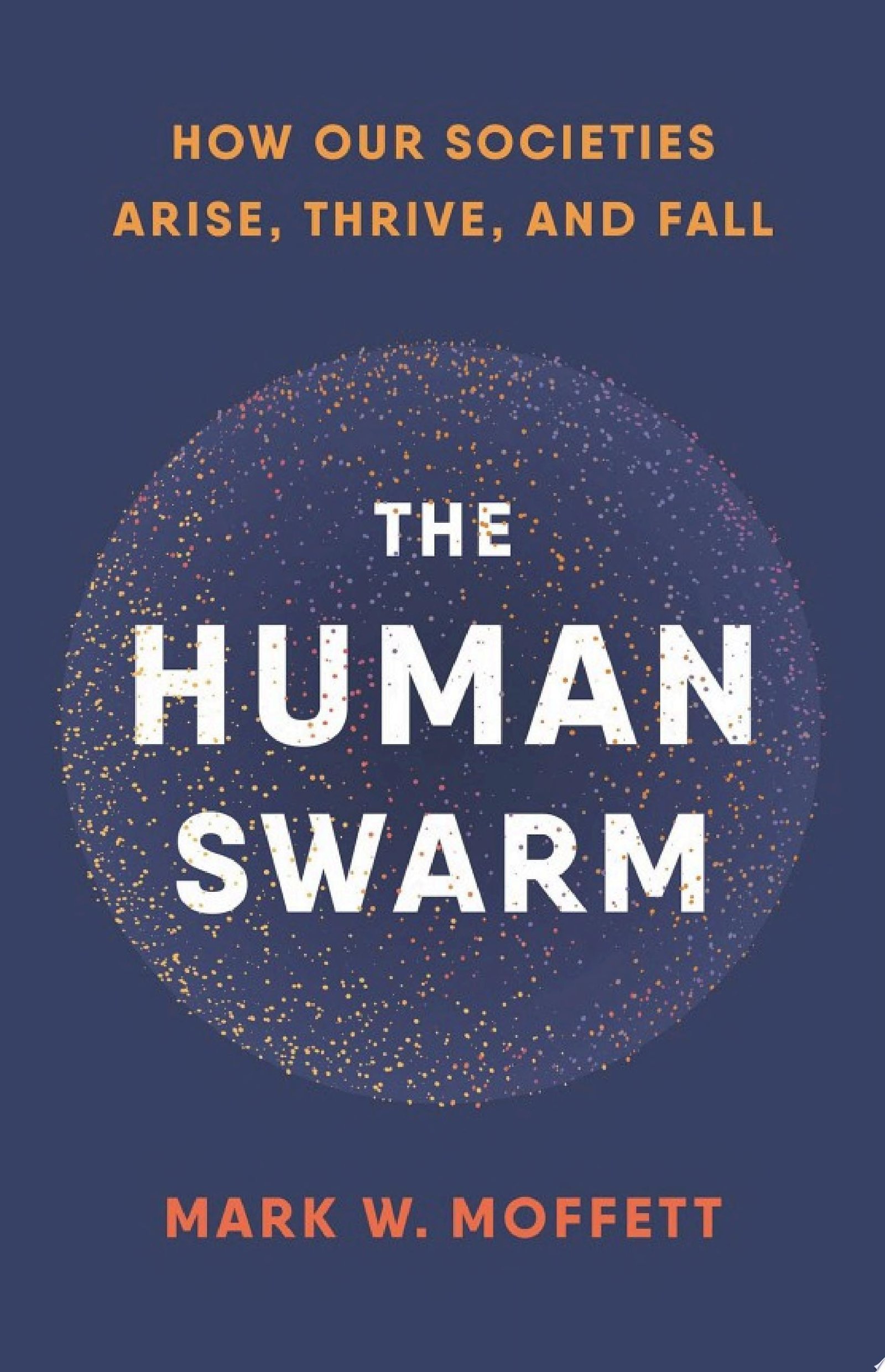
  4. Cover of The Human Swarm: How Our Societies Arise, Thrive, and Fall by Mark W. Moffett

    Cover not available

    The Human Swarm: How Our Societies Arise, Thrive, and Fall

    by Mark W. Moffett

    The epic story and ultimate big history of how human society evolved from intimate chimp communities into the sprawling civilizations of a world-dominating species If a chimpanzee ventures into the territory of a different group, it will almost certainly be killed. But a New Yorker can fly to Los Angeles--or Borneo--with very little fear. Psychologists have done little to explain this: for years, they have held that our biology puts a hard upper limit--about 150 people--on the size of our social groups. But human societies are in fact vastly larger. How do we manage--by and large--to get along with each other? In this paradigm-shattering book, biologist Mark W. Moffett draws on findings in psychology, sociology and anthropology to explain the social adaptations that bind societies. He explores how the tension between identity and anonymity defines how societies develop, function, and fail. Surpassing Guns, Germs, and Steel and Sapiens, The Human Swarm reveals how mankind created sprawling civilizations of unrivaled complexity--and what it will take to sustain them.

    Why it's similar

    Both books explore the evolutionary and anthropological mechanisms that enable humans to cooperate in massive, anonymous societies unlike almost any other mammal.

    What's different

    Moffett grounds his analysis heavily in comparative sociobiology and insect behavior, offering an ecological perspective rather than Harari's broad cultural and historical chronicle.

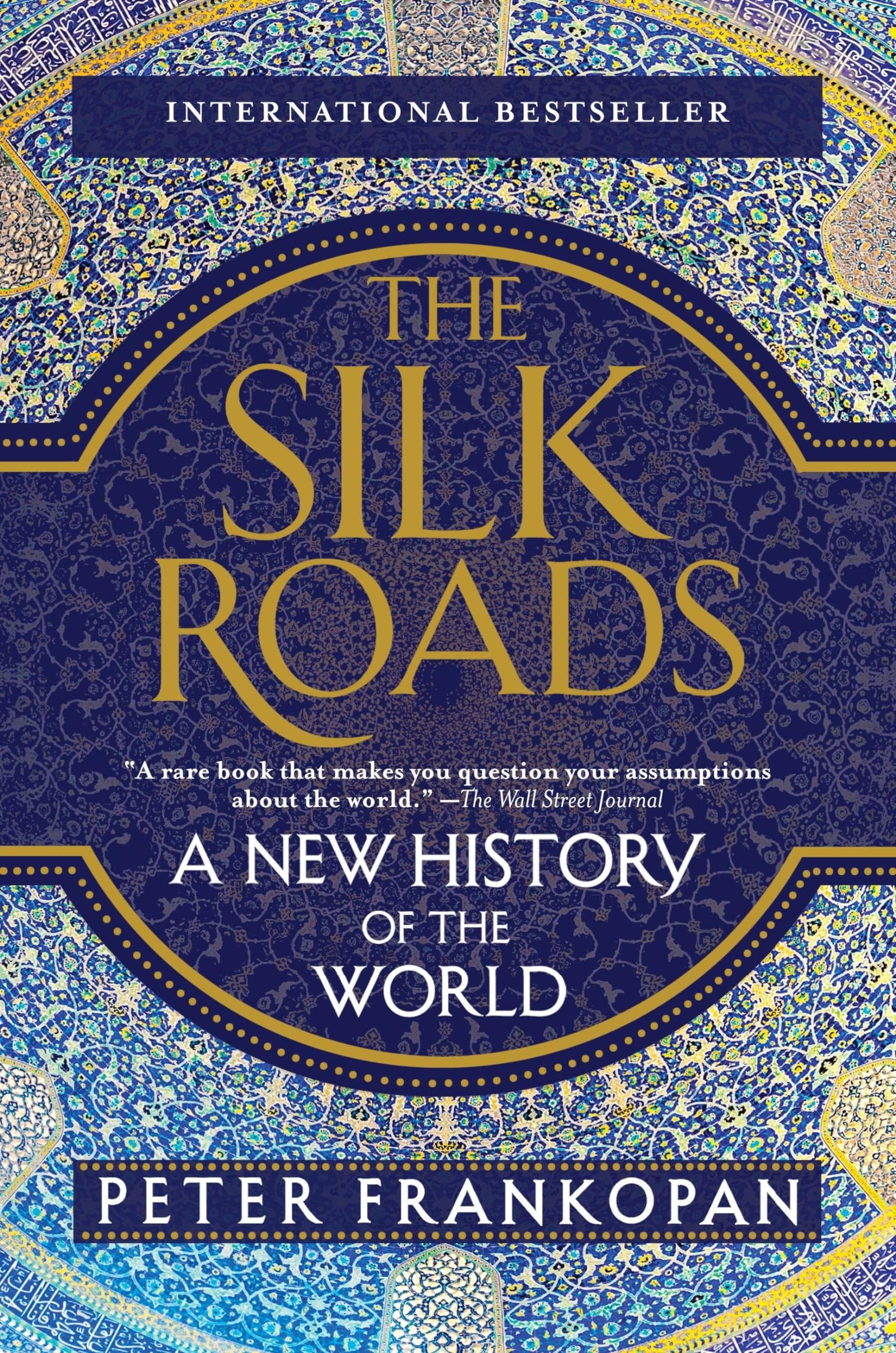
  5. Cover of The Silk Roads: A New History of the World by Peter Frankopan

    Cover not available

    The Silk Roads: A New History of the World

    by Peter Frankopan

    INTERNATIONAL BESTSELLER • Far more than a history of the Silk Roads, this book is truly a revelatory new history of the world, promising to destabilize notions of where we come from and where we are headed next.

    "A rare book that makes you question your assumptions about the world.” —The Wall Street Journal

    From the Middle East and its political instability to China and its economic rise, the vast region stretching eastward from the Balkans across the steppe and South Asia has been thrust into the global spotlight in recent years. Frankopan teaches us that to understand what is at stake for the cities and nations built on these intricate trade routes, we must first understand their astounding pasts.

    Frankopan realigns our understanding of the world, pointing us eastward. It was on the Silk Roads that East and West first encountered each other through trade and conquest, leading to the spread of ideas, cultures and religions. From the rise and fall of empires to the spread of Buddhism and the advent of Christianity and Islam, right up to the great wars of the twentieth century—this book shows how the fate of the West has always been inextricably linked to the East.

    Also available: The New Silk Roads, a timely exploration of the dramatic and profound changes our world is undergoing right now—as seen from the perspective of the rising powers of the East.

    Why it's similar

    Both offer a global, revisionist history that re-centers the story of civilization away from standard Western narratives, highlighting interconnectedness and large-scale forces shaping human history.

    What's different

    Frankopan’s narrative is more conventionally historical and centered on political, economic, and cultural interactions across Eurasia rather than on cognitive and evolutionary shifts in humans as a species.

Looking for something else?

Use our book recommendation tool to discover books similar to any of your favorites.

Find similar books with LibroMatch